Berneray – Western Isles

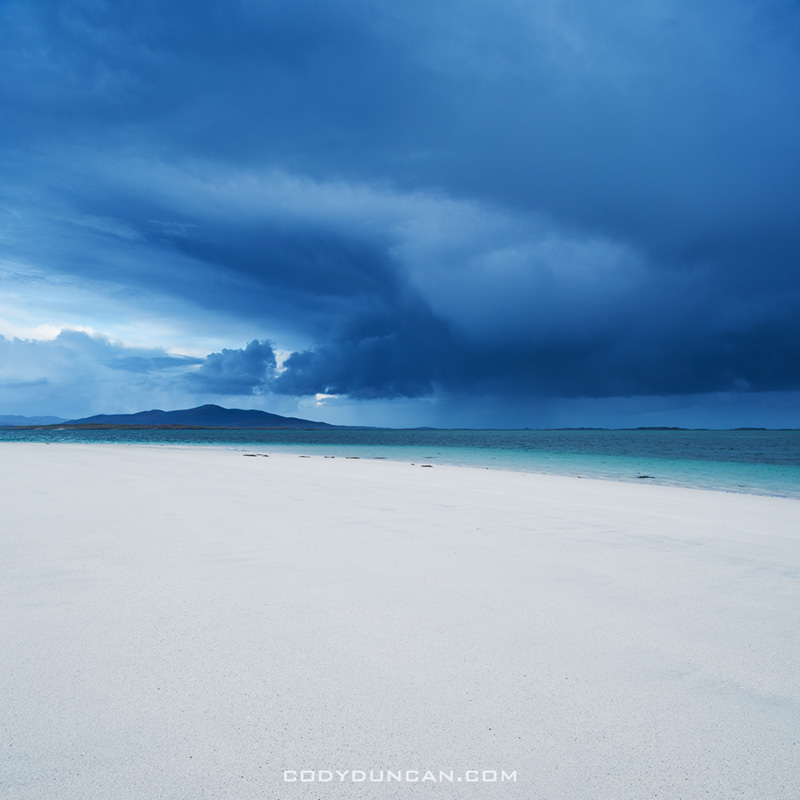
Sound of Harris, Berneray, Outer Hebrides, Scotland

Photo: White sand beach and view across Sound of Harris, Berneray, Outer Hebrides, Scotland

Berneray is the newest edition to my very short list of favorite places, places that I can just get lost in.  I spent a few days there of blasting gales in October last year and returned again to bring in the new year.  The wonderful small little hostel only feet away from the waters edge on the north of the island is my chosen abode.  Run by the Gatliff Trust, the hostel is an old croft house.  Rustic and homely, white washed stone walls and a thatch roof; the way a place must be on a lonely island out on the edge of the world.  The heat comes from a coal stove and one end of the room as the sound of rain patters against the small windows and the howling of wind creeps under the old wooden door.  Lights and candles burn late into the winter nights as strangers sit around sharing meals and stories, perhaps also a splash of two of Scotch.

As with most places in the part of the world, photography is more a game of patience than anything.  It’s a good time to slow down from the fast pace of life, maybe not check those emails for a week or two, it’s not gonna kill you.  All these photos are taken no more than 3-4 minutes walk from the front door.


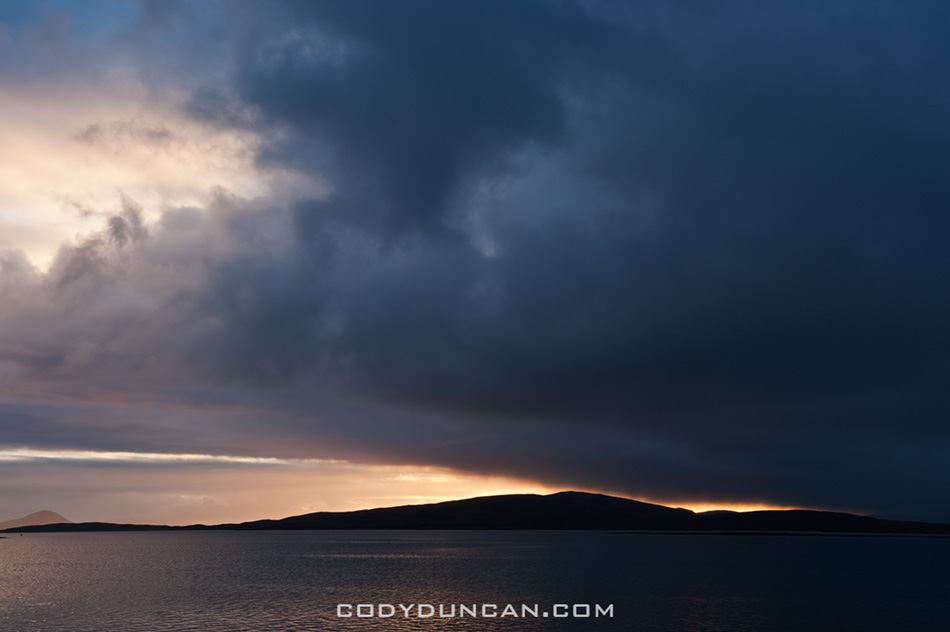
Sunset over Sound of Berneray and North Uist, Western Isles, Scotland

Photo: North Harris silhouetted against the days last light

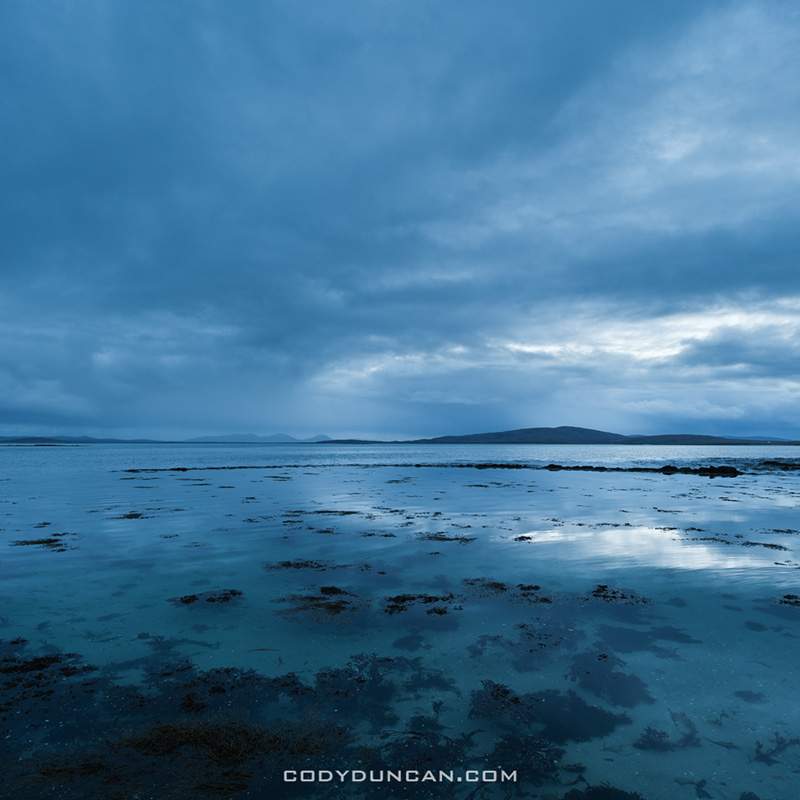
Berneray, Western Isles, Scotland

Photo: Calm waters and blue skies, just before the rain

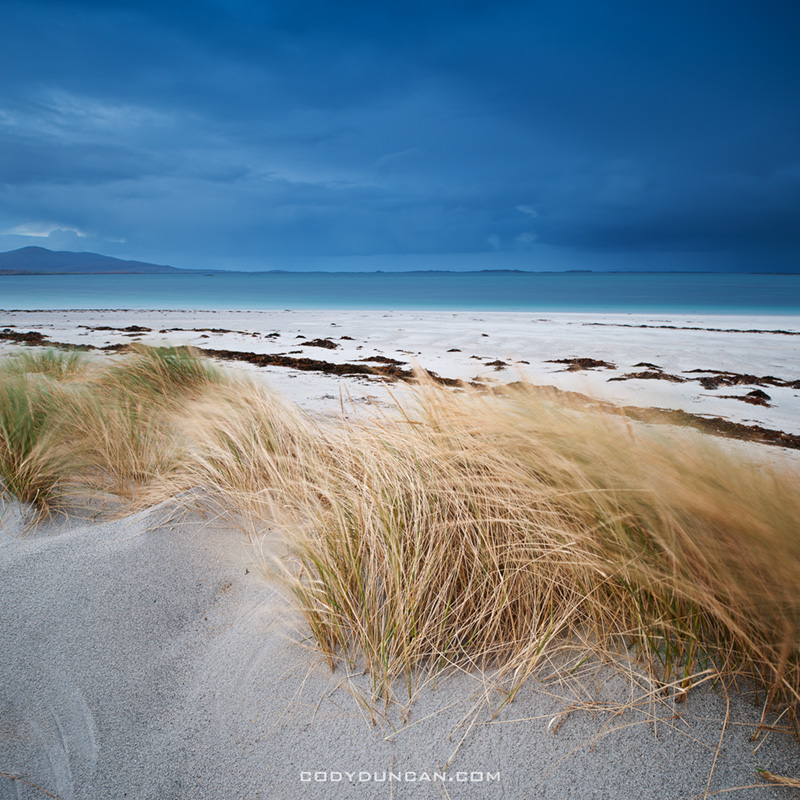
Berneray Dunes, Outer Hebrides, Scotland

Photo: Dunes blow in the wind as rain approaches over the Sound of Harris

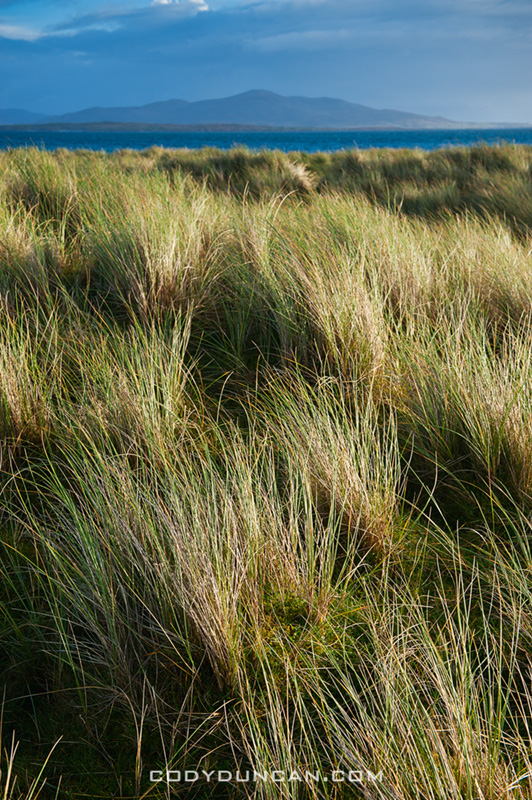
Dune grass, Berneray, Outer Hebrides, Scotland

Photo: An elusive sun lights up the dunes, mountains of South Harris rise in the distance

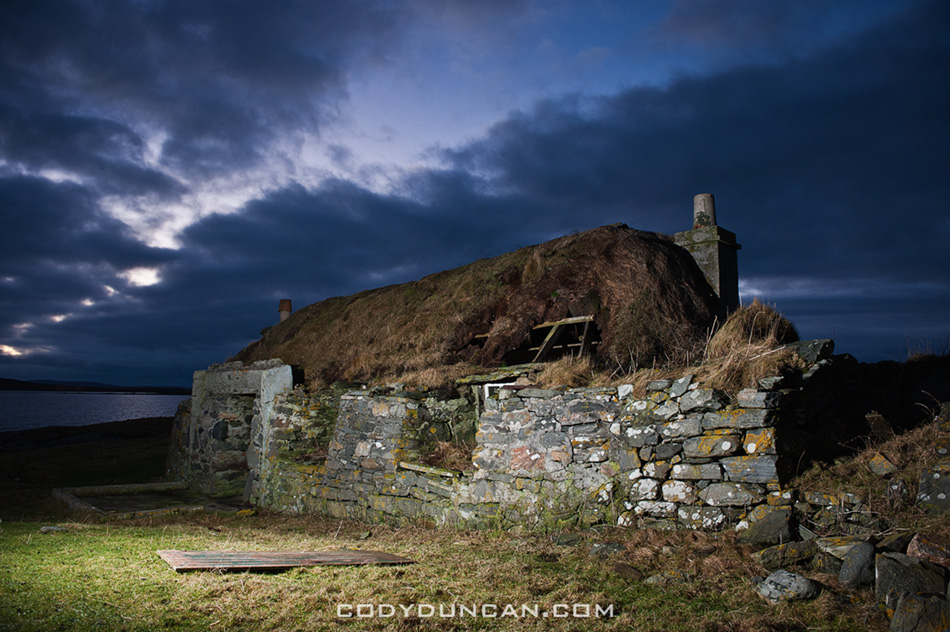
Ruins of derelict croft house, Berneray, Western Isles, Scotland

Photo: Abandoned croft at twilight

Unstad Beach Lofoten Islands

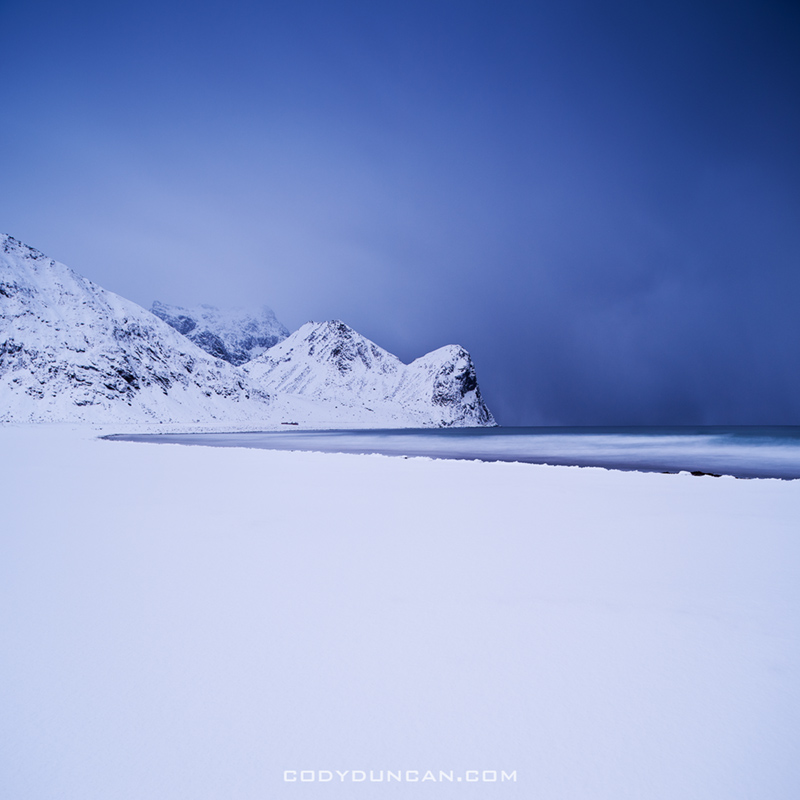
Unstad Beach Lofoten Islands

Photo: Snow covered Unstad beach, Lofoten Islands, Norway

A hunch, as well as some minor understanding of Lofoten weather patterns (if such a thing can exist) led me out a of a never ending snow storm to the relative calm at Unstad.  The light was nearly gone from an already short January day, but there was enough.

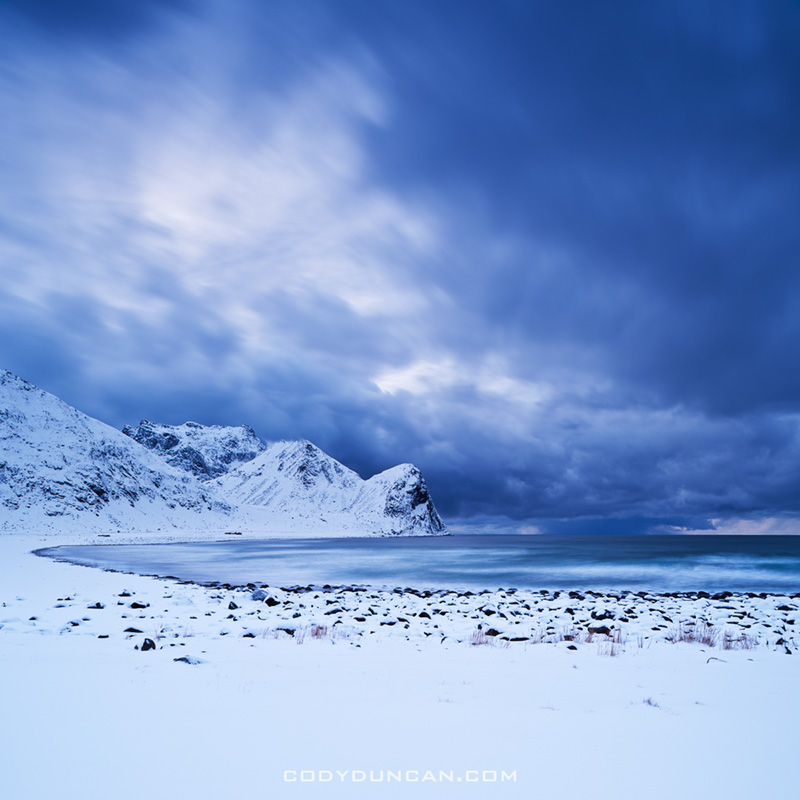
Unstad Beach Lofoten Islands

Photo: Storm clouds over Unstad beach, Lofoten Islands, Norway

Lofoten Islands Winter Sunrise

Lofoten islands norway winter sunrise

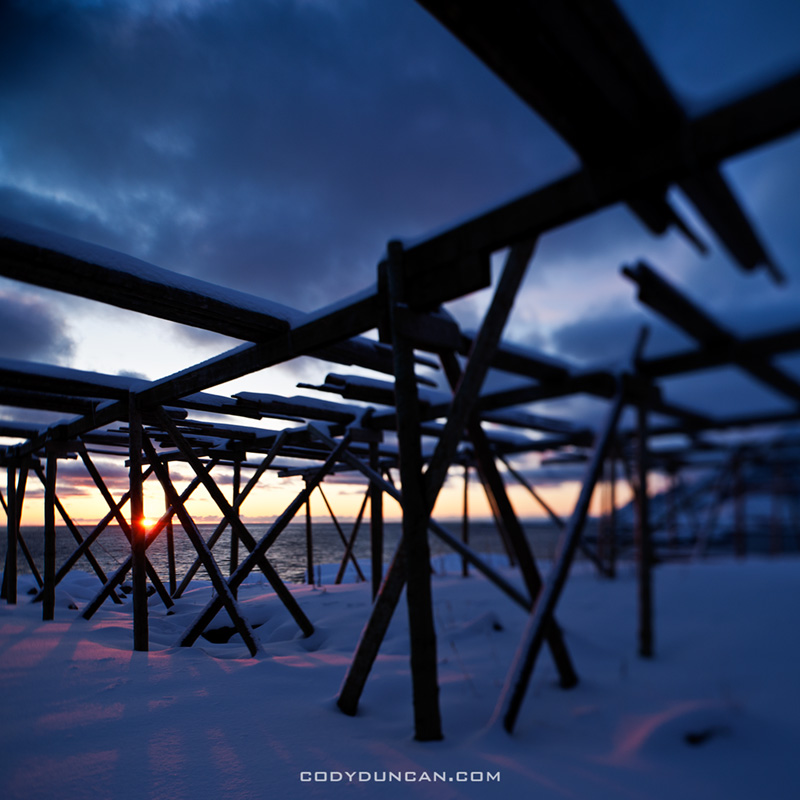
Photo: January sun shines through empty stockfish racks, Lofoten islands, Norway

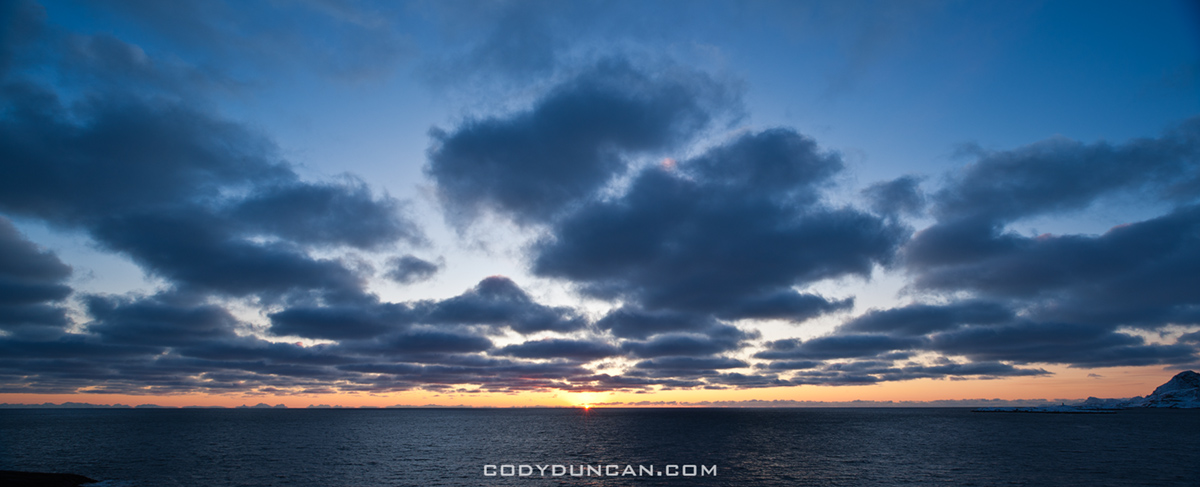
These two images are from the 6th of January, when the sun does not fully rise above the horizon on the Lofoten islands.  Normally we’re used to sunrise in the east, sunset in the west.  However, north of the arctic circle, this isn’t really true.  In winter, the sun rises and sets towards the south, where as in summer, it sets towards the north.  In relation to this is that the sun travels much more parallel in relation to the horizon – I wont go into the numbers right now, maybe some other time I’ll bring out the astronomy nerd in me.  So, the result of this for the viewer, or photographer, is that the sun appears to rise and set very slowly.  Or in more practical terms, sunrise/sunset lasts a lot longer that here in California.  On the case of the 6th of January, the sun travels along the southern horizon for about an hour before disappearing once more.  Yep, that’s it, 1 hour of sun for the day.  Just a few days previous, New Years for example, there is no sun at all.  Though it is not far below the horizon, giving a magical twilight light if the skies are clear.


Lofoten islands norway winter sunrise

Photo: January winter sun on horizon over Vestfjorden, Lofoten islands, Norway.

Ågvatnet – Å I Lofoten Norway

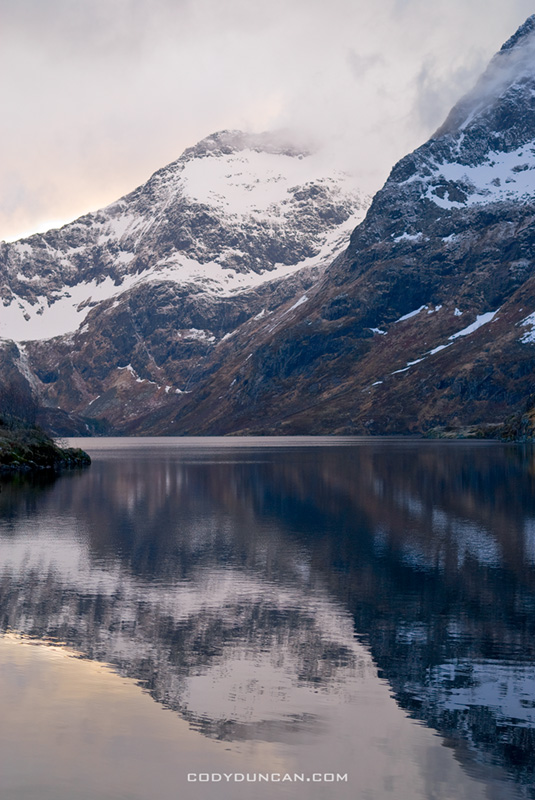
Ågvatnet lofoten islands norway

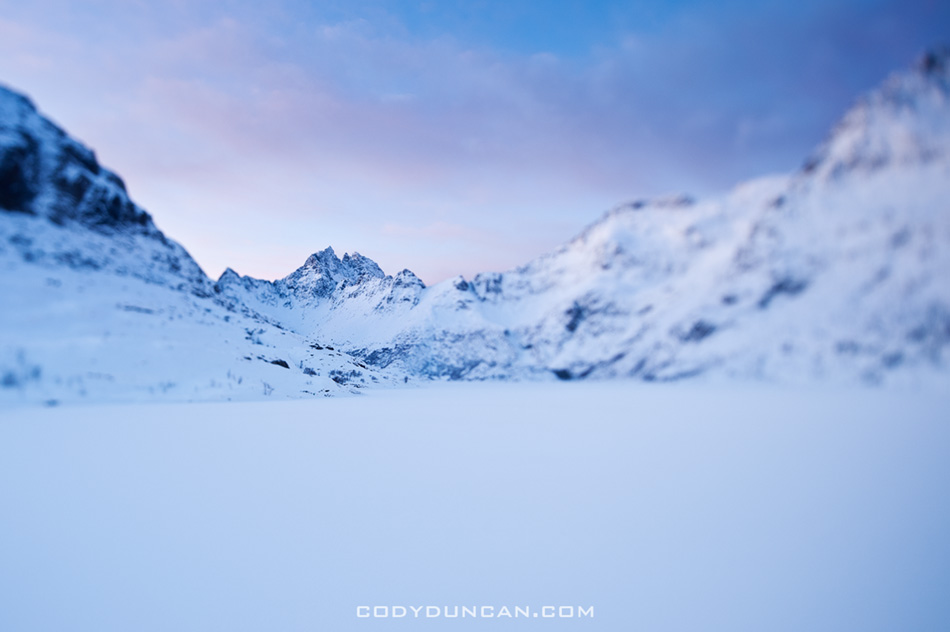
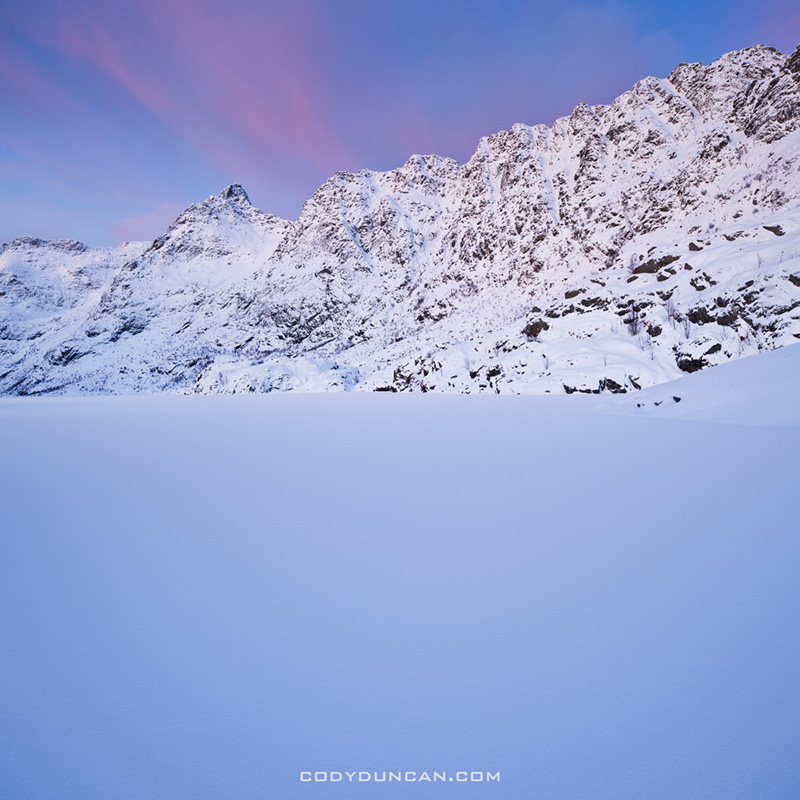
Photo: Ågvatnet cloaked in winter snow.  Jan 2010

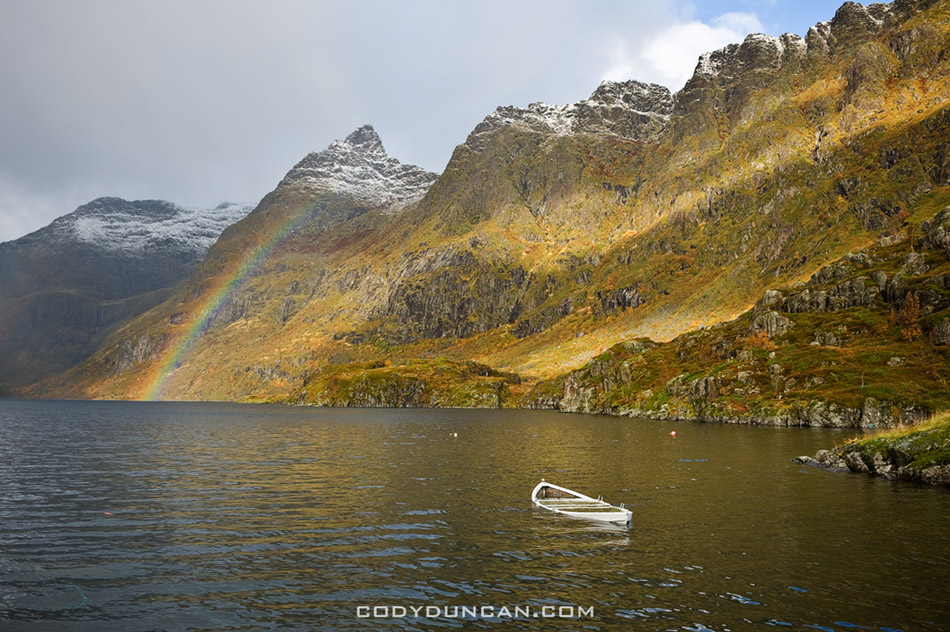
In my last post I wrote about returning to Ågvatnet to try and make a ‘better’ version of a photo that I like very much, and was good for a 20 year having only ever taken a high school photo class, but by today’s standards is a bit lacking.  Ågvatnet is the small lake behind the village of Å I Lofoten, which is the westernmost village, and end of the road, in the Lofoten islands.  It can be a gnarly tourist trap in summer  – the road ends in a parking lot after a 1.5 lane tunnel and it can be stuffed to the brim with motorhomes on a nice July afternoon.  So I usually avoid the area at this time of year.   Though that being said, I’m not usually on the islands in the summer anyways.

Anyhow, here’s a few images of the lake during other parts of the year: winter, spring, and autumn.  The autumn image is the closest I’ve come to my first photo, yet as you can see the boat is not exactly in top form.  The Rainbow towards the left of the image is from the rain that would soak me in another minute.

Ågvatnet lofoten islands norway

Ågvatnet lofoten islands norway

Ågvatnet lofoten islands norway

Schmitsch – Smicz

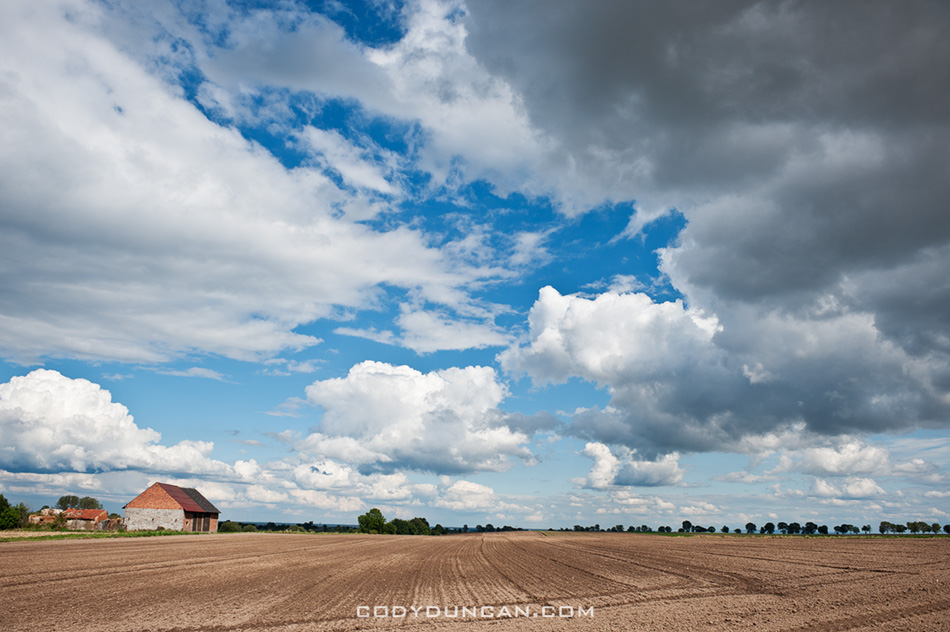
schmitsch Smicz, Prudnik, Poland

Photo: Freshly plowed fields in autumn, Schmitsch/Smicz, Poland

[UPDATE: April 2014 – I have written an updated post about with further information into the Hindera (and other) families – CLICK HERE ]

Rarely do I visit a place that I have a personal connection with.  The tiny village of Schmitsch/smicz is an exception.  It’s the place where my great-great grandfather, Albert Hindera, was born.  In those days it was part of Prussian Silesia.  Today it now lies in Prudnik county, in the south of Poland.

This history of Schmitch, now named Smicz in Polish, is a complex one.  At the center of Europe, the Silesian region (Schlessien) has fallen under the rule of numerous duchies, kingdoms, and empires throughout the centuries.  By the mid 18th century the Prussians gained control over the region from the Austrian Habsburgs.  In 1871 Silesia then became part of the newly formed German empire (Deutsches Reich) where it remained a part of Germany up until the end of WWII, when a majority of the region was transferred to Poland.

In 1879, at the age of 17, Albert, along with several brothers and sisters, left the German port of Bremen for America.  Landing in Baltimore he took the train to Nebraska, eventually ending up with land in western part of the state.  He built himself a house out of sod and started a farm.  After 5 years, he was awarded the deed to his land, upon which he sold it and bought another farm in the southeast of Nebraska near the town of Steinauer, where the soil was better.  There he married another Silesian immigrant, Anna Lempka and in 1889 my great-grandfather George Hindera was born.  Looking at family records it seems like half of Schmitsch must have traveled to America during that period.  The names of the Nebraska census closely match those from the war memorials, cemetery, and church records in Smicz.

I was granted the privilege to look in the hand written church birth/baptism registry where I saw the names of long forgotten family and the records of their births from centuries past.  Even finding a few new names of my family line further back in time.  It was somewhat difficult to read the old German handwriting.  Especially once I got used to one persons writing style in the book, and then a new person took over with even worse handwriting!

I unfortunately was not allowed to take any photos of the books, not sure why not.  It’s a bit frustrating to realize how much information is locked away in those old books with their deteriorating paper and fading ink.  And there is no real access to it outside of going there, and hopefully having someone who speaks the language of the local priest.  I guess I should also be thankful that my family records have survived two wars and dramatic political changes.  Hopefully I can return in another few years and keep looking back further in time and maybe try and get permission to take some photos.  The records go back to the 1500’s.

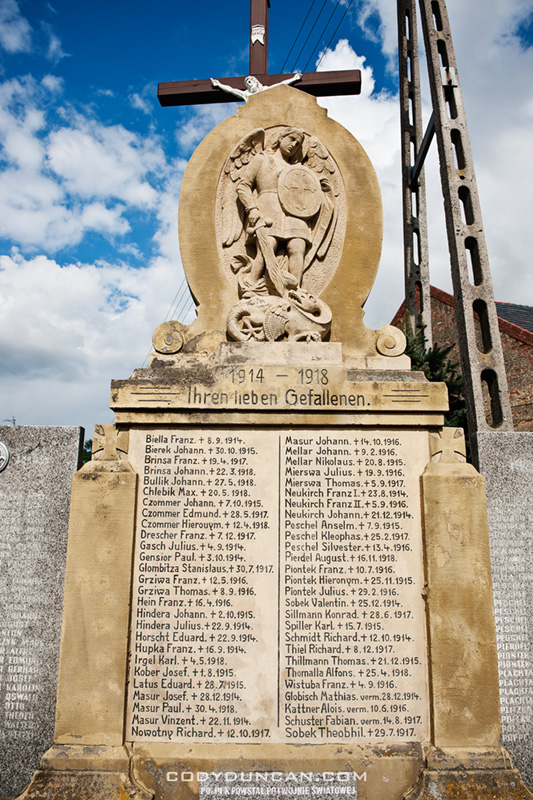
Looking at the war memorial in the city center, I guess it is a good thing my family left.  The names Brinsa, Hindera, Mellar, and Peschel are all of direct ancestry to me, and probably nephews/cousins of Albert.  It seems a large toll was taken from this small town of 500 souls.   The cost of the second world war was even greater.

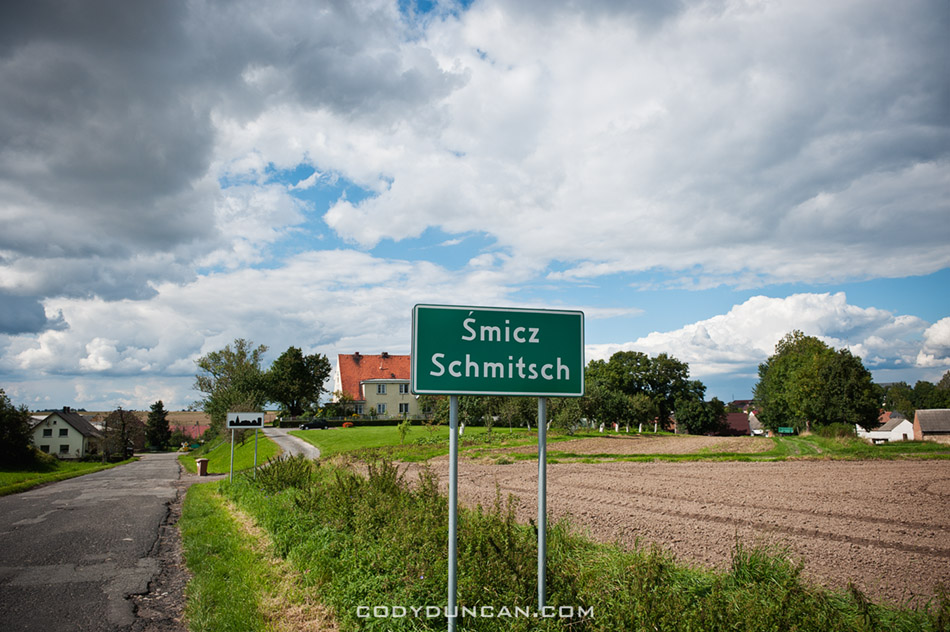
Schmitsch smicz poland bilingual sign

Photo: Bilingual Polish/German city sign.  The region where Schmitsch/Smicz lies is one of the few areas in Poland where German has recently become an official recognized language once again.

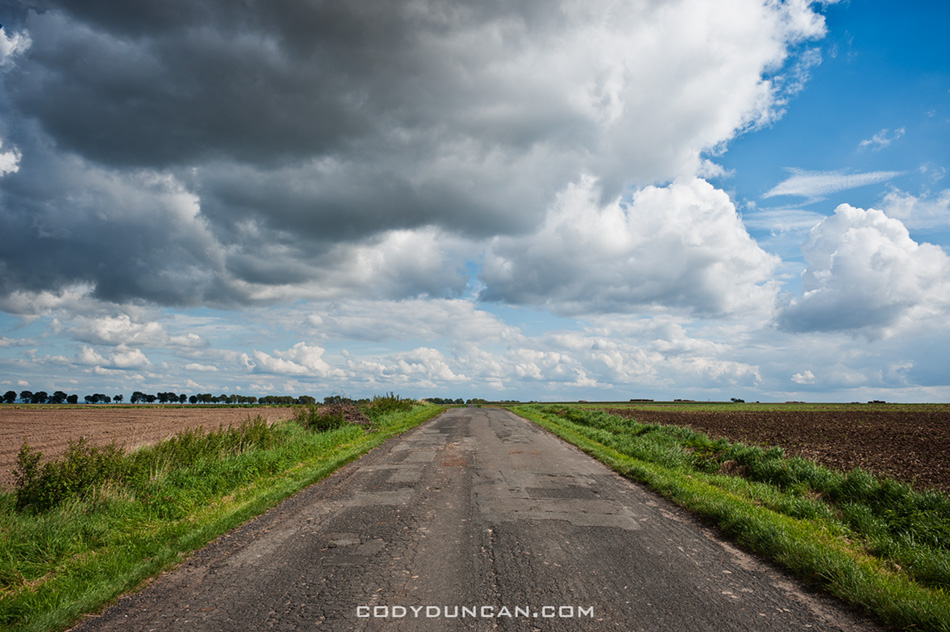
Rural road in poor condition, Smicz, Opole, Southern Poland

Photo: Main road into town.  Could use some paving.

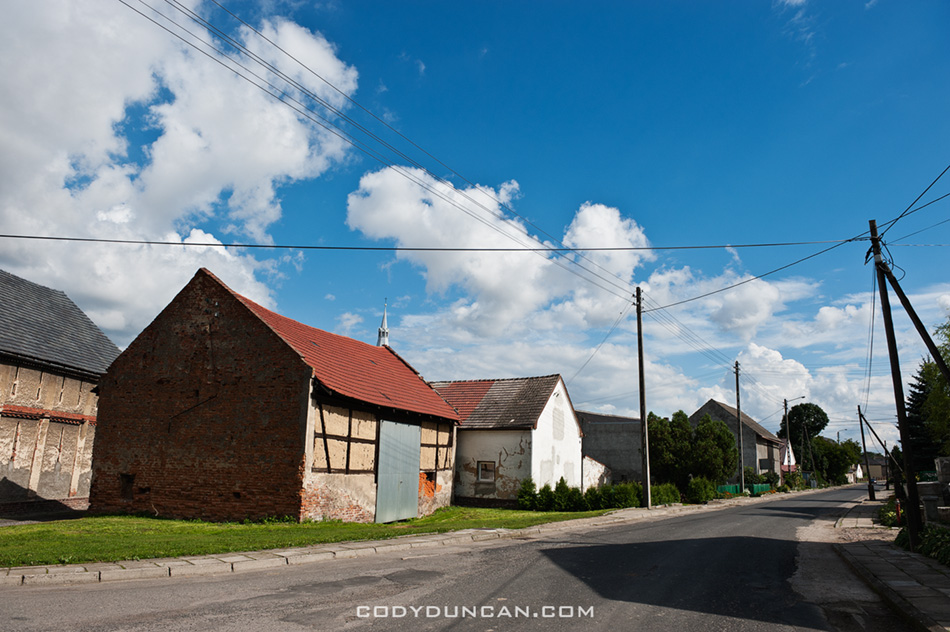
Schmitsch smicz poland

Photo: Downtown Smicz.  Other than the asphalt and power lines, it probably hasn’t changed much since Albert left.  When I return I’ll see if the family home still exists.

German war memorial schmitsch smicz poland

Photo: WWI memorial.  A lot of names, both German and Polish, for a village of 500.

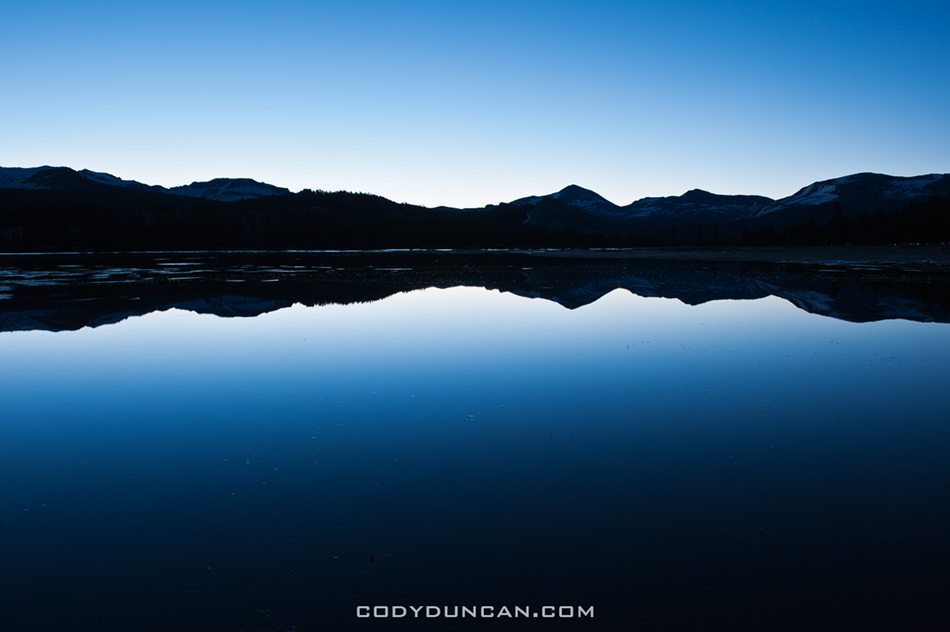
Tuolumne Meadows Yosemite

Tuolumne meadows yosemite landscape

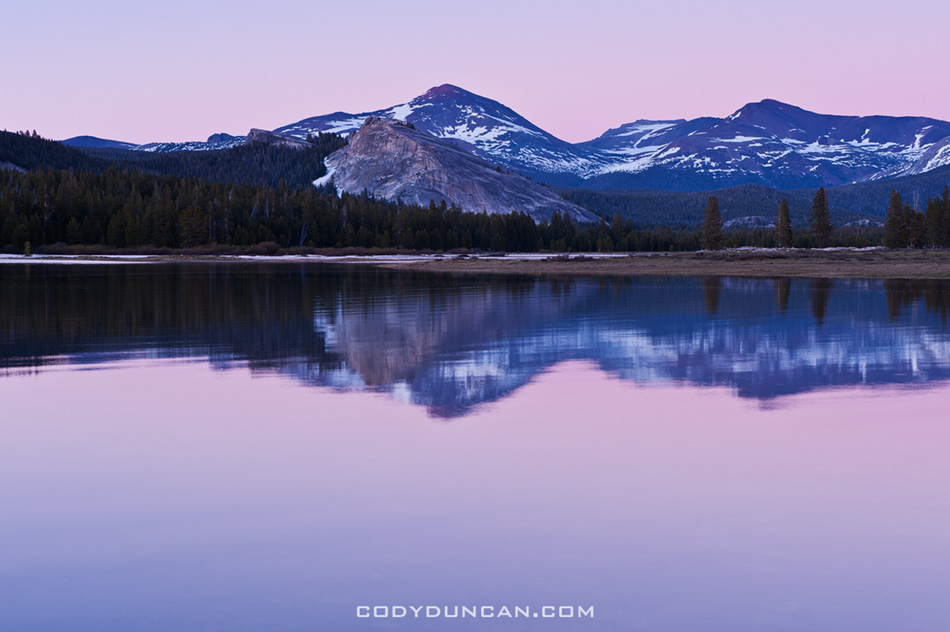
Photo: Sunset from a flooded Tuolumne Meadows over Lembert Dome and Mount Dana, Yosemite national park. June 23, 2011

Over the weekend I was on a short camping trip with my dad and brother.  While I’ve taken trips with each of them individually in the last years, it’s probably been 10+ years since the 3  of us sat around a campfire together.  Highway 120 to Tuolumne Meadows just opened last weekend, so we were some of the first to enjoy summer in Yosemite’s high country this year.  The sky was cloudless and the sun was hot.  Snow seems to be melting quite fast and the river are quite big at the moment.  These first two photo’s show the current conditions of the meadow which is quite flooded at the moment.  Mosquitoes still haven’t arrived in the high country, but were quite viscous at the campground.

It wasn’t really a photo trip for me so I didn’t shoot too much.  Though I still managed to get myself up at 4:00 am on a couple days and go looking for images.  Didn’t end up with anything interesting.

Tuolumne meadows yosemite landscape

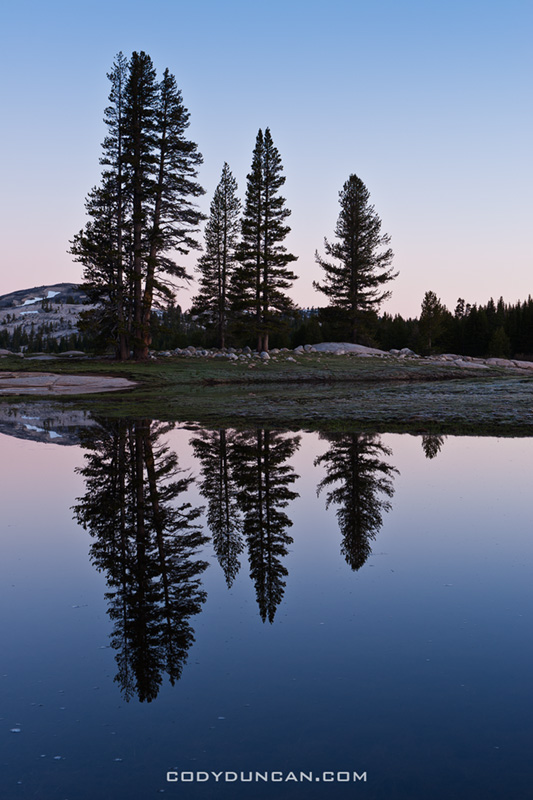
Photo: Sunrise from a flooded Tuolumne meadows, Yosemite, California.

Tuolumne meadows yosemite landscape

Photo: Dawn reflection on Tuolumne Meadows, Yosemite, California.

Hadselfjorden – Norway

Hadselfjorden vesteralen norway

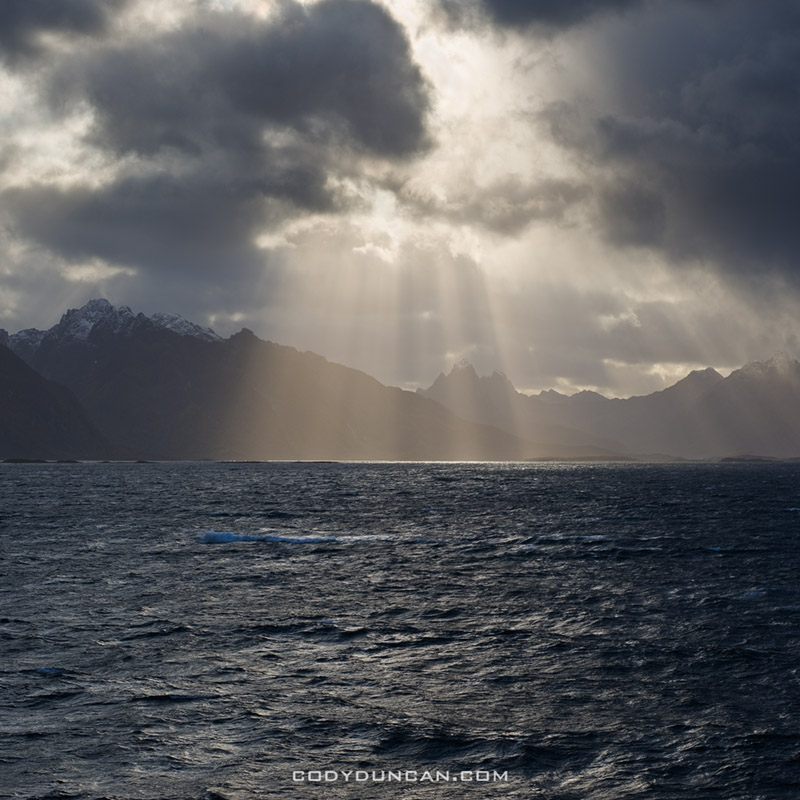
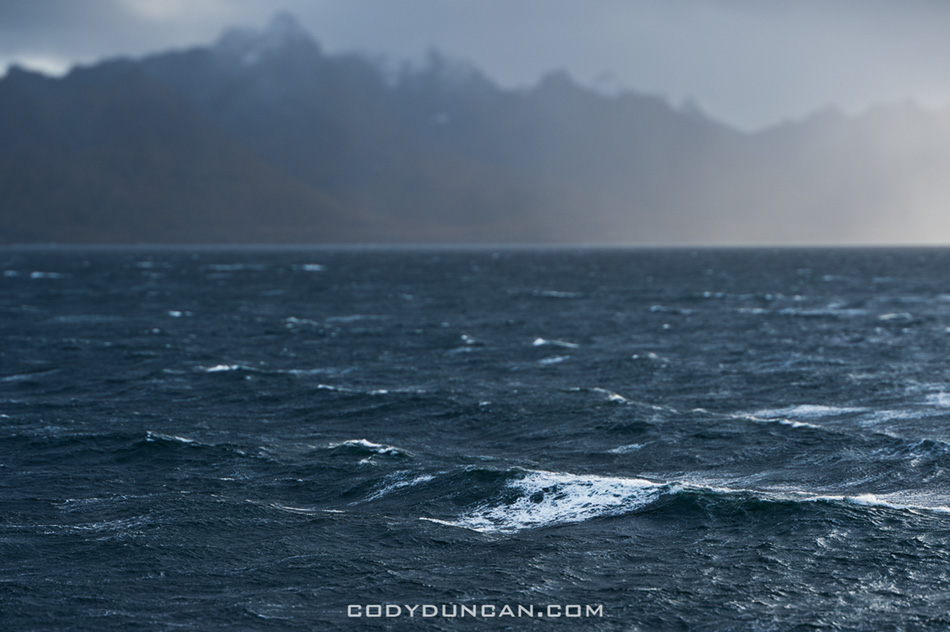
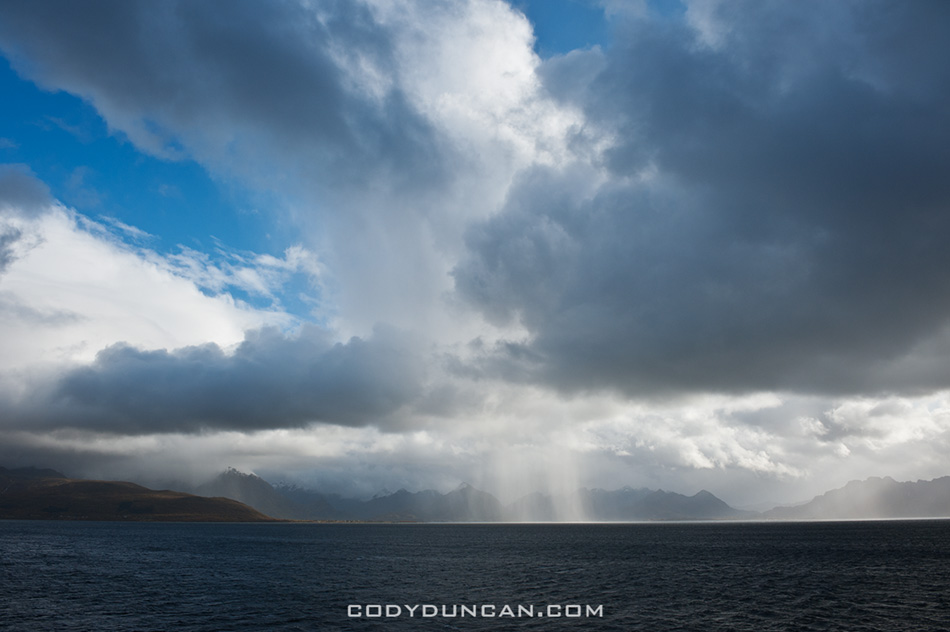
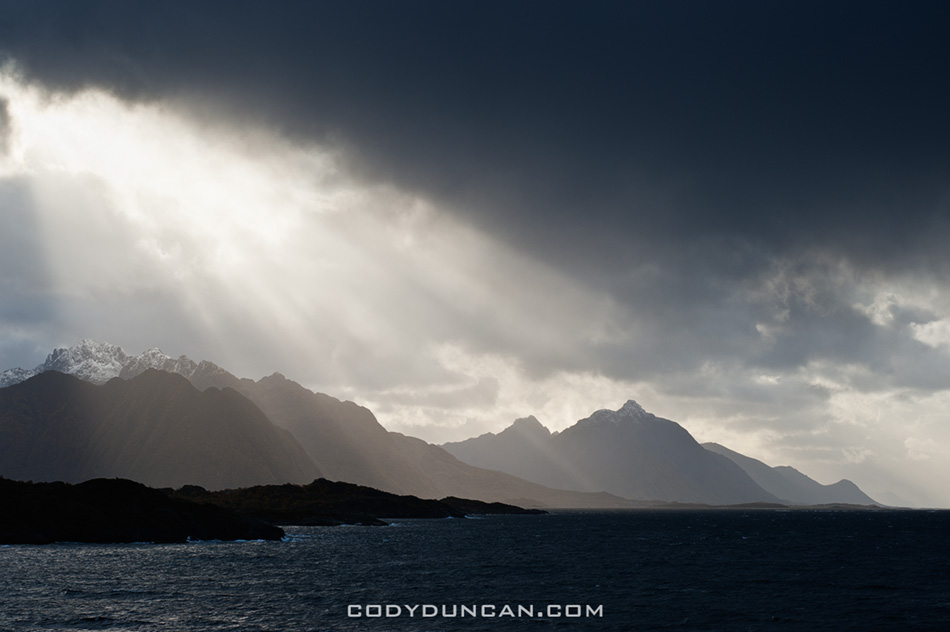
Photo: Autumn storms over mountains of Vesterålen while traveling on Hurtigruten ferry through Hadselfjorden, Norway. Sept 2009

I think Hadselfjorden is not really a fjord but a straight, separating some of the Vesterålen islands and a bit of Lofoten as well.  But in Norwegian, if its made of salt water, and you can see land from it, they call it a fjord. Forget about firths, bays, straights, bights, coves, channels, etc.  Fjord it is in Norway. (Yes, I know this is not totally true.  I’m attempting to be slightly humorous.  No need to correct me.)

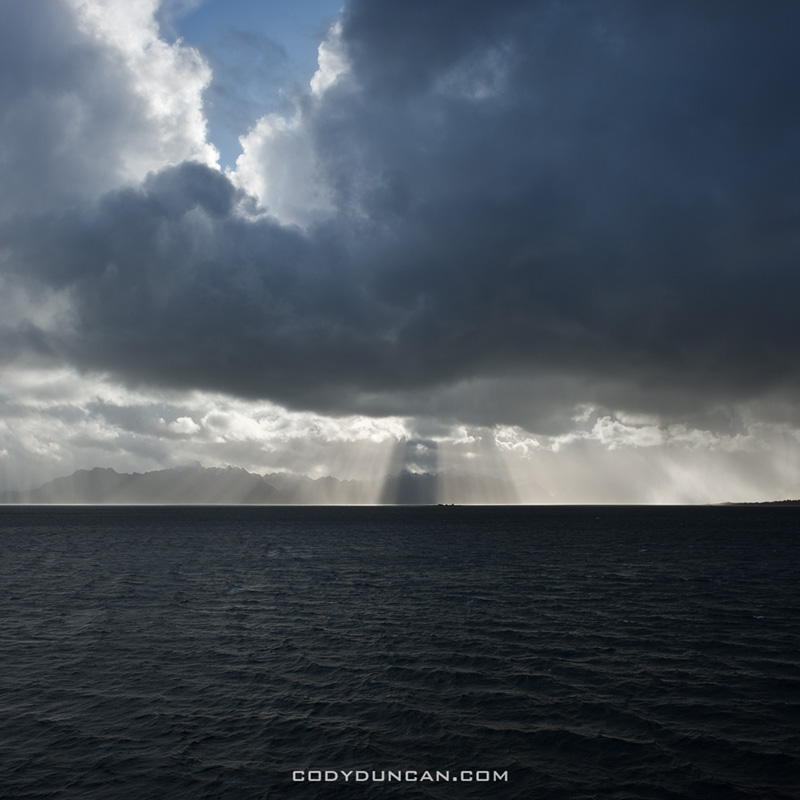
I usually have pretty good luck with dramatic light and stormy weather while traveling along the Norwegian coast, making it one of my favorite ways to get up and down the country.  Maybe its just always stormy.  These images are from one autumn afternoon while traveling on the Hurtigruten from Sortland to Stamsund. 


Stormy seas of Hadselfjord, Vesteralen, Norway

Dramatic skies over rising mountain peaks of Vesteralen viewed from Hadselfjord, Norway

Steep mountains rise from sea, Lofoten islands, Norway

Dramatic light over mountains of vesteralen as viewed from Hurtigruten

Moonrise over Vestfjord

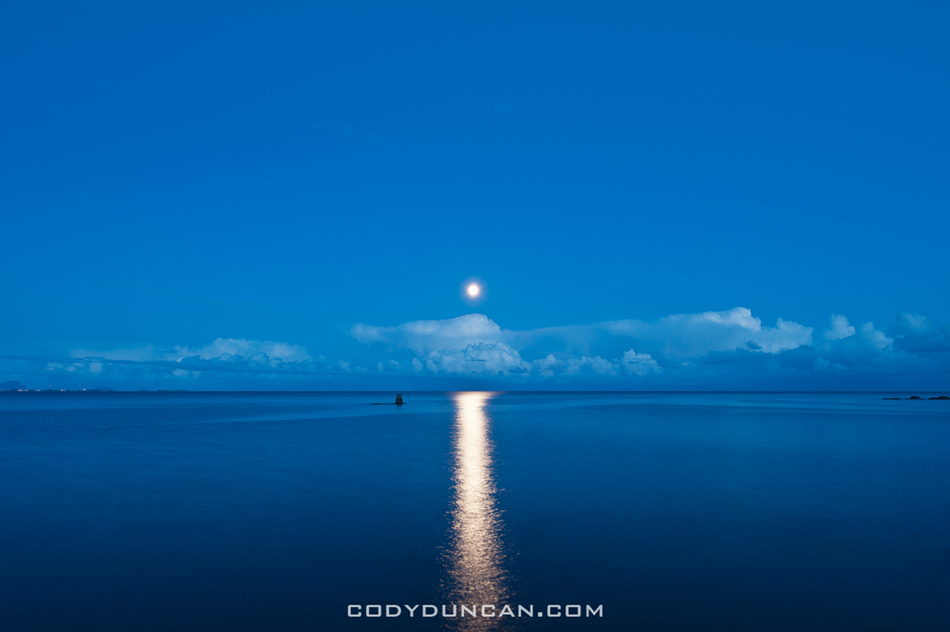
Full moon rising over Vestfjord, Stamsund, Lofoten islands, Norway

Photo: Full moon rises over Vestfjord on a calm autumn evening, Stamsund, Lofoten islands, Norway.  Oct 2009

The last month has been pretty slow for me so I’ve been processing some older stuff to send into my agencies.  Mostly its crap that I passed over for a reason, but I’ve found a few decent images here and there.  I think looking back on work after a year or two gives a different perspective than that of immediately after the trip.  Perhaps the separation of time means I look more at the image alone, without the added memories or emotions that may be associated with it.  Or maybe I was simply going for a particular look or theme immediately after a trip.  Whereas now I can look back and figure if its a halfway decent photo, I might as well see if my agency wants it.  Though I’m sure there are slightly more productive things that I should be doing, like writing a business plan that will hopefully allow me a work visa for Norway.


Sgurr Mhairi – Isle of Skye

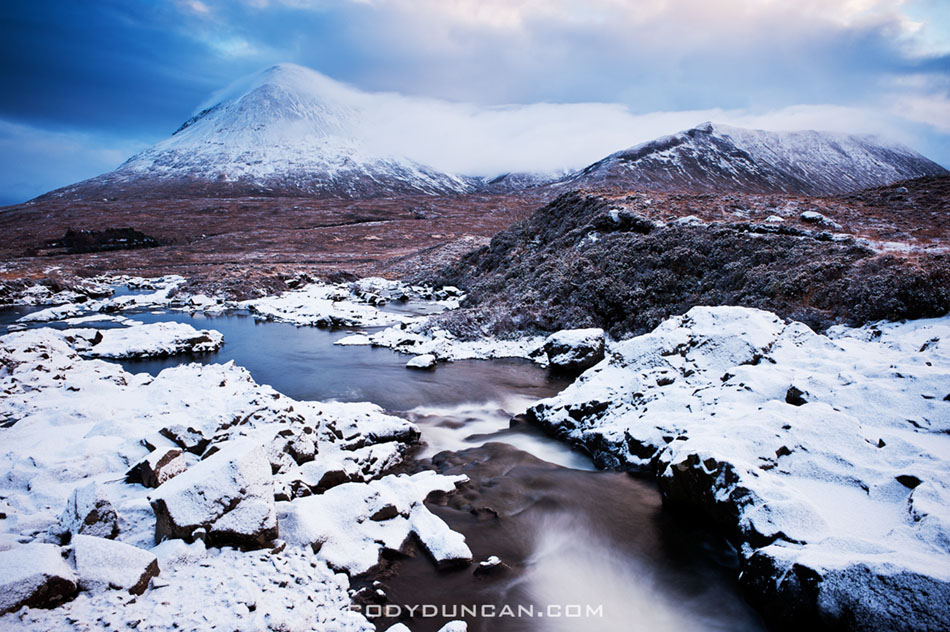
Sgurr Mhairi - Glamaig and Red Cuillins in winter, Isle of Skye, Scotland

Photo: Winter view towards Glamaig – Sgurr Mhairi and Red Cuillin hills, Sligachan, Isle of Skye, Scotland. Jan 2011

Some years back I was making my way down Glamaig, back towards Sligachan to hitch a ride back to Portree.  I’m not sure if I was on a people trail or a sheep trail, the latter I think, when I came upon some more-than-normal-looking boggy section.  After a quick estimate, I set myself up to jump across most of it, figuring I’d end up a little above my ankle in mud, but would otherwise avoid too much of a mess.  Ha!  I ended up nearly to my waste as my leg plunged into the bog.  My momentum, and the unexpected depth of my step took me flying into the ground on the other side of the pit.  Quite lucky really, as I could have ended up totally submerged.  Once back at Sligachan, I was left to wash off as best I could in the river before attempting to catch a ride up to Portree.  Luckily it was getting near dark so my true state couldn’t be seen and a ride came along after not too long.

Panoramic Landscape Photography

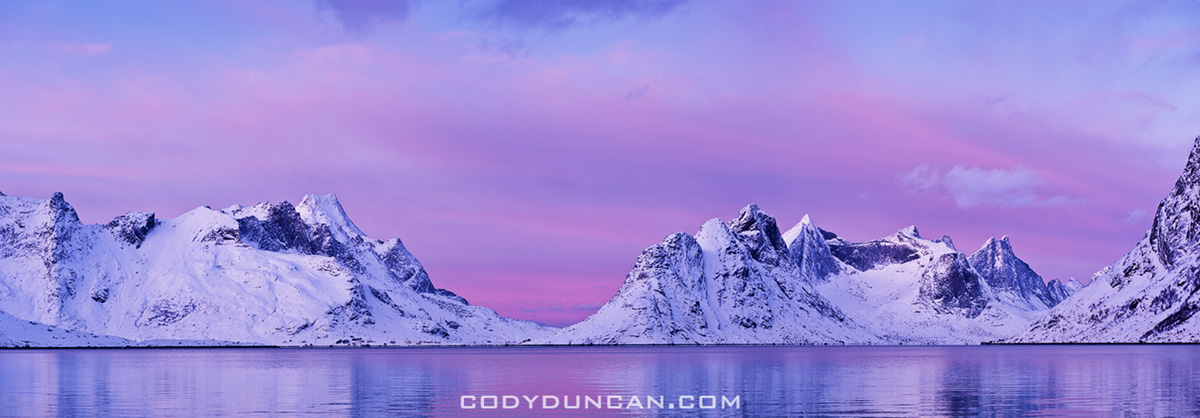
Scenic winter view across Kjerkfjorden towards Vindstad, near Reine, Lofoten islands, Norway

Winter view across Kjerkfjorden towards Vindstad, Lofoten islands, Norway.  Jan 2010.  This was perhaps one of the most perfect days I’ve experienced in my life.  The day to which I have since judged every other; none having come close in the last 18 months since I took this photo.  But as with all good things, the 4 hours of light of the polar winter was gone all to quickly.  An amazing 4 hours it was.

I now have close to 600 images in my panoramic gallery.  CLICK HERE to view more.
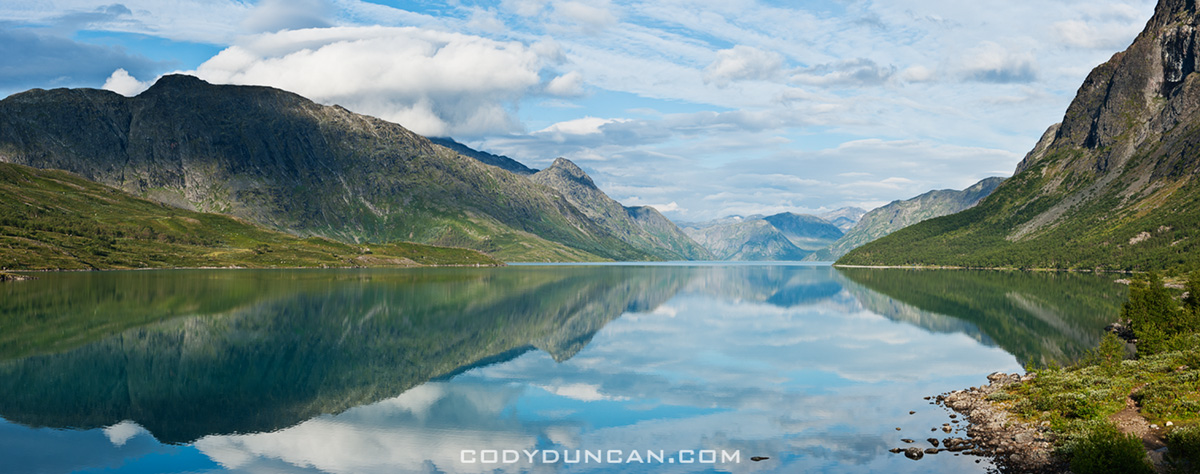
Reflection on lake Gjende, Gjendesheim, Jotunheimen national park, Norway

Lake Gjende, Jotunheimen national park, Norway.  Aug 2010.  I rose early for sunrise, yet nothing of much interest materialized so I returned to my tent for a few more hours of rest.  A few ours later I peeked out the door and saw this scene of total calm.  I checked my watch, shit, the ferry leaves in a few minutes, time to get moving.  I hoped up, ran down barefooted (to the mosquitoes liking) to the shore of the lake.  5 minutes later, the morning ferry to Gjendesheim passes by, the wake leaving the lake rippled there after…
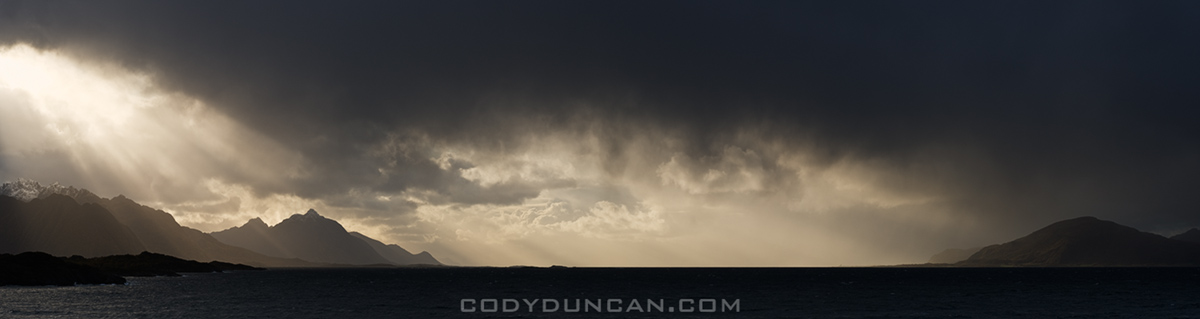
Dramatic light over Lofoten and Vesteralen islands, Norway

Lofoten and Vesteraalen islands, Norway.  Sept 2009.  Taken from on board the Hurtigruten ferry as I traveled from Sortland to Stamsund on a rather stormy and windy day.  Luckily storms and wind make for nice light is one is brave enough to face the elements.  I made many nice Photos during this journey.
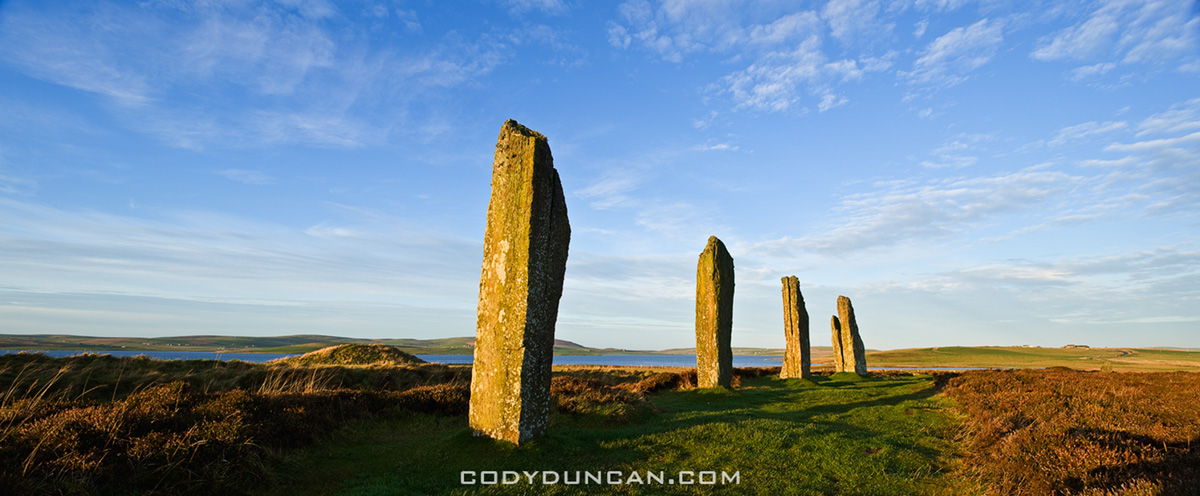
Ring of Brodgar standing stones, Orkney, Scotland

Ring of Brodgar, Orkney, Scotland. Dec 2009.  The barren, windswept islands which make up the Orkney islands are one of my favorite places.  While the short days of December are probably not the most ideal time to visit, it had been three years since I last stepped foot here, so my return was long overdue.  Despite a bit of wind, the weather cooperated quite well over the few days I was there.

Welsh Mountain Pony

Welsh Mountain Pony, Hay Bluff, Brecon Beacons national park, Wales. Jun 2010.  Hay Bluff, just above the town of Hay-on-Wye was one of my favorite places for a summer afternoon of wandering around the hills.  Quite often the weather was typically ‘Welsh’ (rain), yet some days managed to turn out quite nice, there in a Welsh Mountain Pony, and there you go, the photo is almost made for you.

Stamsund, Lofoten islands Norway

Stamsund, Lofoten islands, Norway.  July 2010.  I’ve stood in this very spot a hundred times in the last 10 years, and walked away with a hundred different images.  It’s a little rocky point out beyond the harbor from the Stamsund Vandrerhjem.  To the north is this view towards Henningsvaer.  East looks across the Vestfjord towards the Norwegian mainland, visible on clear days.  This photo was taken after 11:00pm, on one of those magically endless Lofoten summer days.  Stamsund is quite simply the center of the universe, enter and you may never return…
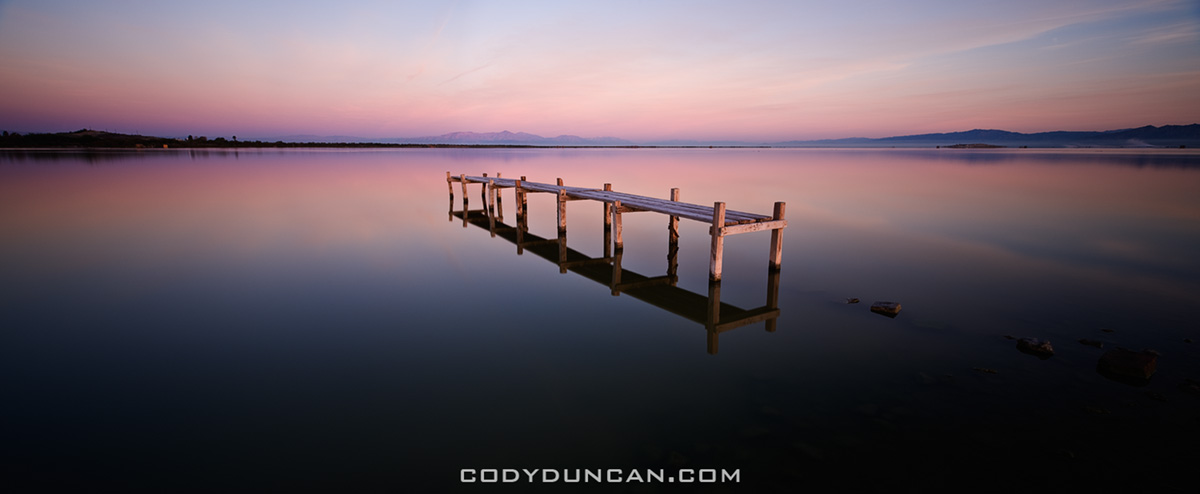
Abandoned walkay in water, Salton Sea, California

Salton Sea, California.  Mar 2010.  The Salton Sea is always an interesting place, both for ones eyes and nose.  I arrived in darkness to a location that I thought I knew, yet I wasn’t aware just how far the lake level had declined since my last visit.  This is what I found waiting in the morning light.
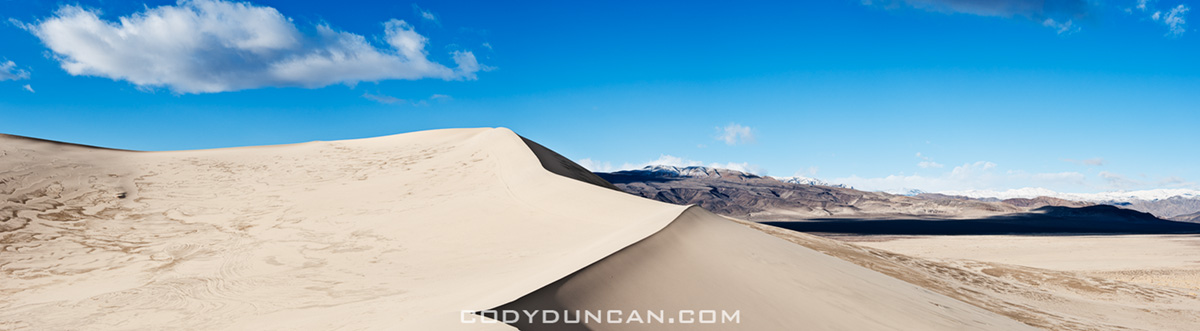
Eureka dunes, Death Valley national park, California

Eureka Dunes, Death Valley national park, California. Feb 2011.  Isolated in the northern end of Death Valley national park are the Eureka Dunes.  Less frequented than other areas of the park, one can escape here for a bit more isolation and a better chance at footprint-less dunes.
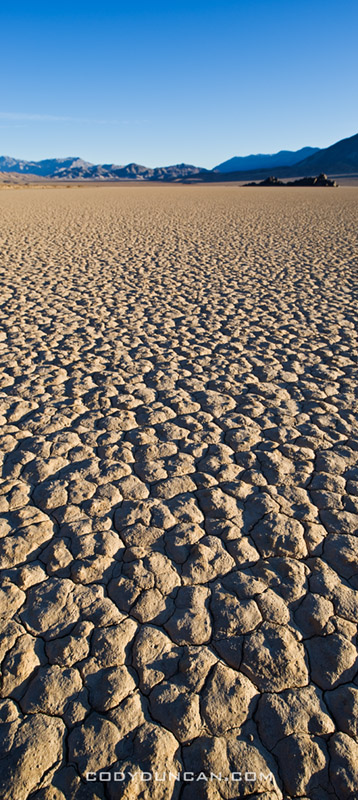
Dry lake bed of the Racetrack playa, Death Valley national park, California

Devil’s Racetrack, Death Valley national park, California. Feb 2010.  Vertical panoramic to emphasize the texture of the dry lake bed playa.