
Hiking the (Northern) Kungsleden Trail from Nikkaluokta to Abisko in Autumn, Sweden
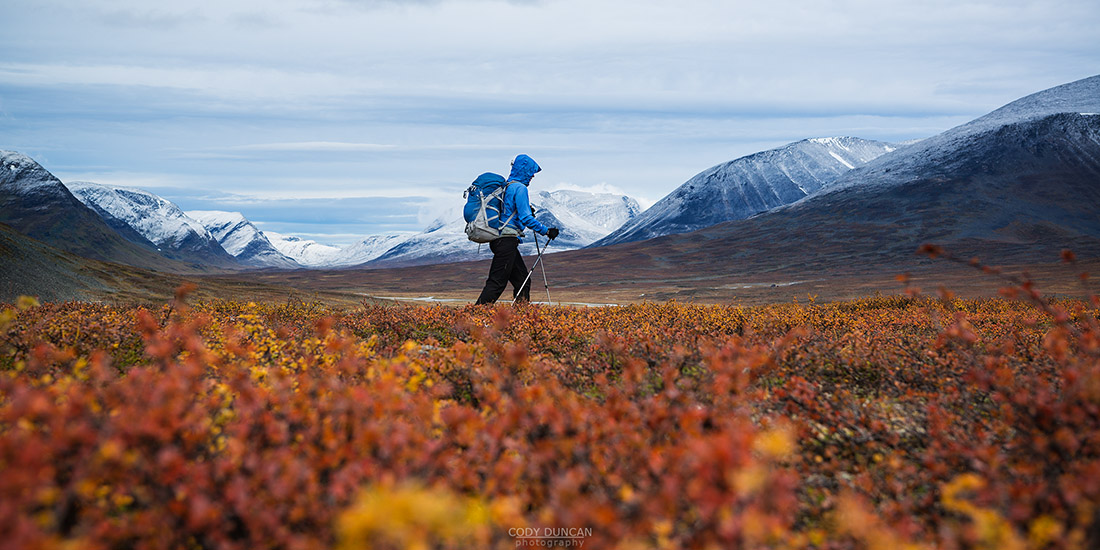
Photo: Bright colors of September line the way north, Kungsleden trail, Sweden
** UPDATE FEBRUARY 2016: Kungsleden North Ebook now available: For more information, CLICK HERE **
While the Kungsleden trail is one of the most popular hiking routes is Sweden, as August passes to September and the end of the short arctic summer nears, the crowds begin to thin and the trail grows quiet as the land awaits the coming of winter. The arrival of September sees the birch forests turn a golden yellow and the blueberries glow bright red, while the wide valleys rise to snow-capped mountains. The days become cold and the air crisp as snow flurries blow over you. The nights become dark again and northern lights once again dance in the sky. Autumn is a wild, colorful, lonely, exhilarating, adventurous, time to experience the wilds of Sweden’s north.
THE BASICS
Logistically, you need to be prepared for colder weather, the shutting down of the mountain huts, though there are rooms which remain open, and the stopping of some public transport to and from the trail.
Huts: All the mountain huts – fjällstations – hostels along the trail are run by the STF (Svenska Turistföreningen) Swedish Tourist Association.
The STF website can be found here.
The Website will have all current info on opening/closing dates of the mountain huts, as well as some maps and other info such as services provided at each hut (ie. show up to Alesjaure a bit early and relax in the sauna).
The mountain huts are seasonal, typically closing in mid September. September 21 for 2014.
The longest distance between any two huts is 21 km, Alesjaure – Abiskojaure. The average distance for the rest is about 12-14 km.
The price for a bed while the huts are open is between 295 – 330 SEK (in September). Kebnekaise fjällstation is 395 SEK
Becoming a member of the STF, or any of the other Hosteling International related organisations will get you a discount each night, between 50-100 SEK. You can sign up for advance via the STF website, or you can simply register on your first night in Abisko or Kebnekaise, where you will then receive a temporary membership card (official one will be mailed). Membership costs 295 SEK, and will pay for itself after 6 nights staying in any STF/HI related hostels.
Food: The nearest supermarkets to the trail are located in Kiruna and Abisko Östra.
STF Abisko and Kebnekaise fjällstation have well supplied shops to purchase a variety of food and other essentials like camping gas, matches, etc. Prices will reflect this convenience.
Some of the huts, typically every other hut, will have a small boutique shop where some food essentials can be purchased, but they often begin to sell out of certain items as the season finishes. And of course they will be closed after a certain point.
GETTING THERE
The main starting points for the northern Kungsleden loop are Abisko in the north, and Nikkaluokta in the south. The nearest airport is in Kiruna, about half way between.
Logistically, and especially if traveling in Mid to late September, I suggest starting in Nikkaluokta and hiking north to Abisko. The Kiruna – Nikkaluokta bus finishes service on the closing date of the huts (21/09/2014). Arriving after this will mean something like a 1000 SEK taxi ride for the 1.5 hour journey back to Kiruna. Abisko is served by a seasonal bus and year round train service, as well as having a multitude of accommodation possibilities, making it a much more convenient place to finish the trail if hiking on a looser time frame.
Nikkaluokta: Seasonal bus from Kiruna, operating when the mountain huts are open. Optional taxi service after bus finished.
Bus: Länstrafiken Norrbotten line 92
Abisko: Year round train service to Kiruna (and Stockholm) and Narvik, Norway. Seasonal bus service while mountain huts are open.
Bus: Länstrafiken Norrbotten line 91
Train: SJ Website
Kiruna: Nearest airport. Year round train service to Stockholm and Narvik, Norway. Seasonal bus service from multiple destinations in Sweden. Do not spend any more time in Kiruna than you have to.
SAS Airlines: Daily flights from multiple European destinations
Norwegian Airlines: Daily flights from multiple European destinations
Train: SJ Website
Bus: Länstrafiken Norrbotten
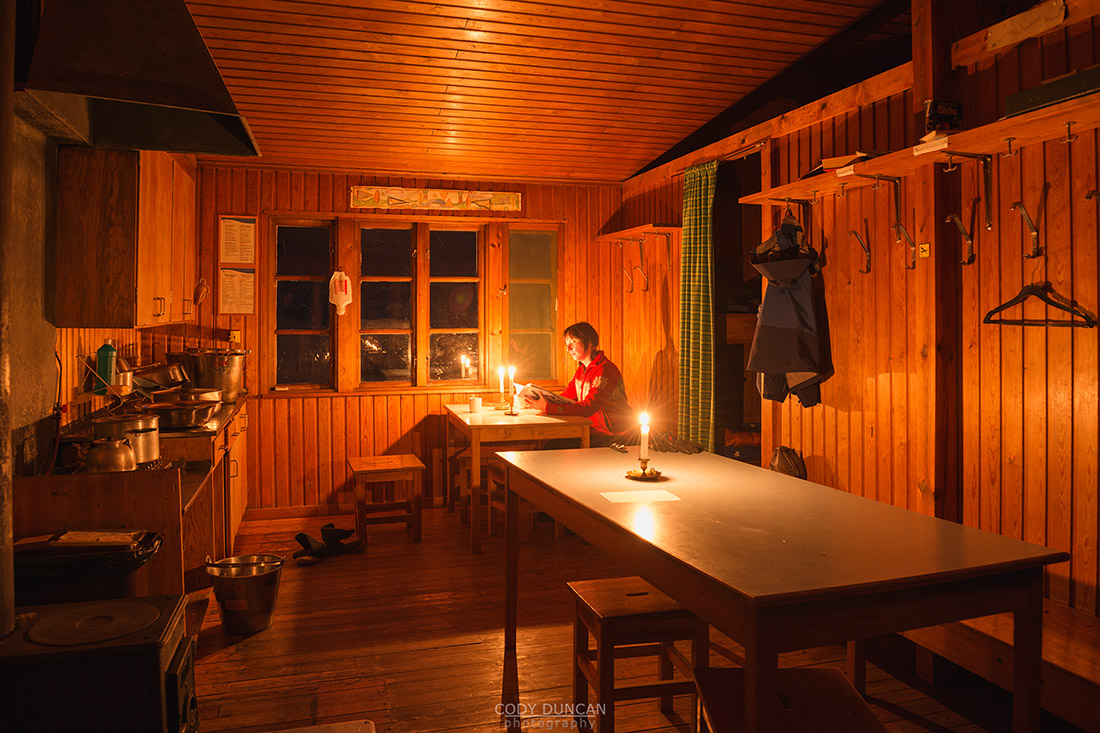
Photo: Candles illuminate Singi hut at night, Kungsleden trail, Sweden
THE HUTS ARE CLOSED
The huts close towards the end of September (21/09/2014). What this means is that there will be no staff on hand, no food can be purchased, and the gas stoves will be turned off.
On the northern section of the trail, between Kebnekaise and Abiskojaure, all of the huts have an ‘emergency’ room (säkerhetsrum) that can be used for a small fee. These rooms vary in size and the number of beds available:
Abiskojaure: 2 beds
Alesjaure: 4 beds
Tjäktja: 2 beds
Sälka: 9 beds (big, pretty much a full size hut)
Singi: 1 bed (enough room for 2 people on floor)
Kebnekaise:
Access to the wood shed, a saw and axe should be available and all the shelters have wood burning stoves which provide plenty of heat after a cold, wet day on the trail. Water buckets for fetching fresh water, cooking and cleaning supplies are also provided. One or two toilets will be left unlocked, but don’t depend on there being toilet paper. There might be a small amount of leftover food available as well, but be sure to bring enough for the entire trip.
Besides the proper STF huts, there are also several emergency shelters at several points along the trail. These typically consisted of a single room with wooden benches along one or two walls. Some have wood burning stoves, yet by the end of the season, there is often no more wood available. Still, if the weather is bad, better to be inside and out of the wind, even if a little cold.
WEATHER
My experience from September 2009 was of predominately cold weather and strong winds. Snow fell on several days and rain on the rest, so most of the snow that fell would be gone from the trail by the next day or two. The temperature dropped down to about -8˚ C on the coldest morning. While the average day was about 3-5˚ C. 7˚ C was the warmest day I experienced. From talking to others I seemed to get the impression that this was an unusually cold September, but one should be prepared for such conditions. It is the Arctic and any weather is possible.
In 2012 conditions were a bit milder and there was only one day that involved a bit of snow on the trail, and this was around the higher elevation Tjäkja hut. The rest was an even mix of windy, rainy days, and then a couple absolutely beautiful sunny and calm days.
In 2013, a little further to the south near Sarek national park, it was so warm and sunny that I was only in a t-shirt for two consecutive days and the trail was actually dusty at times. The hike ended early though, due to me dropping my camera in a lake.
WILL YOU BE ALONE
Though the crowds of summer will be gone, one will not likely be totally alone on the trail, especially the last few nights the huts are open. But for the most part, you will cross a couple people on the trail each day and have a few people in the huts each night. If the huts haven’t yet closed, sometimes the warden will put you in the emergency room with several other people, other times you might get a room to yourself.
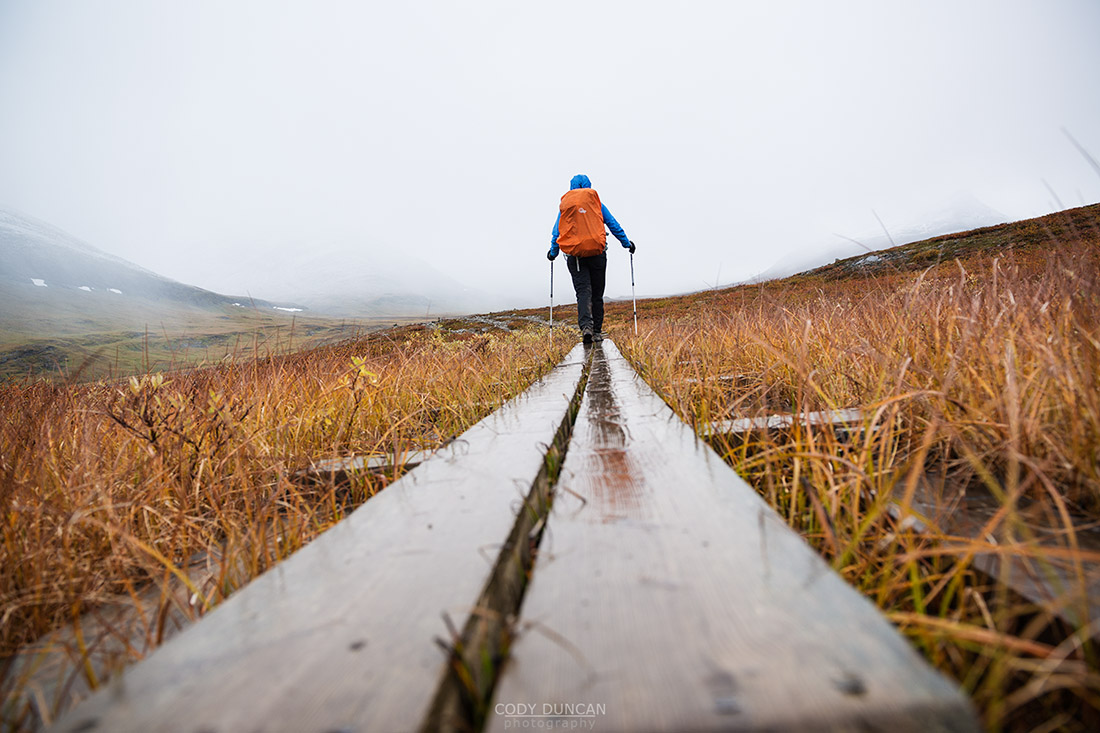
Photo: ‘Mountain sidewalk’ through a section of bog, Kungsleden trail, Sweden
THE TRAIL
Even under 10-15cm of fresh snow, the trail was alway easy for me to follow. The high point, Tjäktja pass, is rocky on the north side and often without a proper path. It could be a bit tricky as the rocks are quite slippery and hard to see under a medium amount snow, though it is not a long distance between the pass and Tjäktja hut.
The route itself, as long as one has a map and knows how to navigate, would be hard to lose as it basically follows a series of valleys north to south. There are also a series of markers for the winter trail that are easily visible, though these do not always follow the proper summer route.
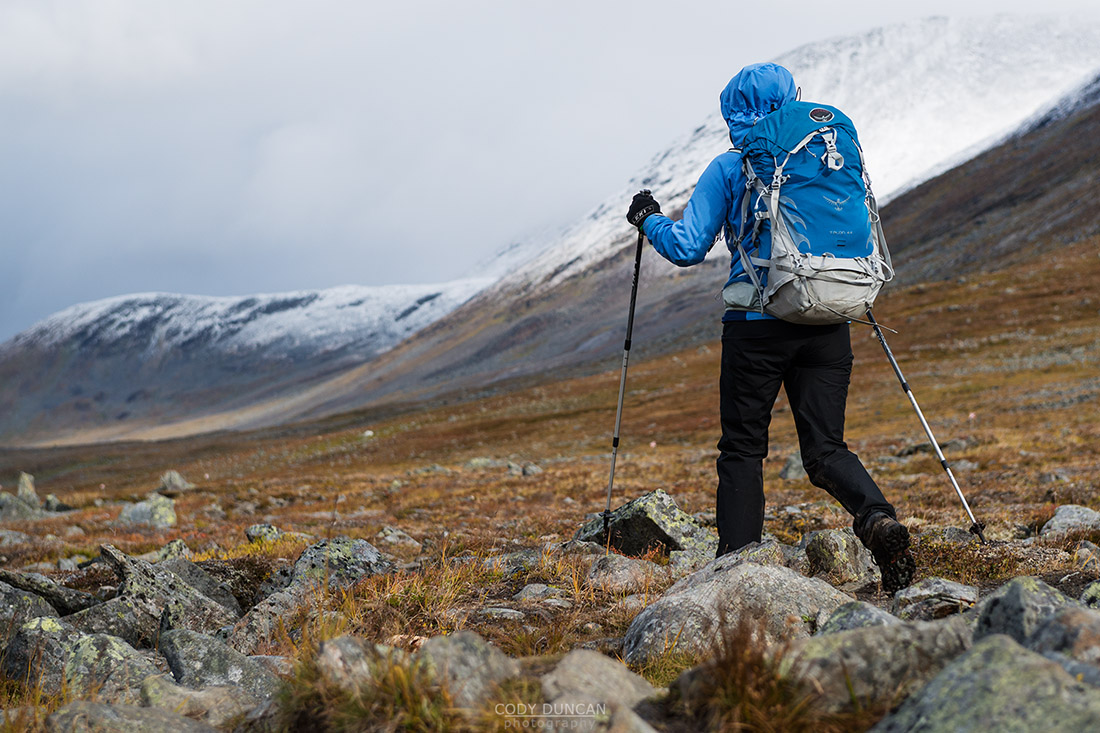
Photo: Hiking with a 44 liter Osprey Talon backpack, more than enough room, even after I added a bit of my camera gear, Kungsleden trail, Sweden
GEAR AND CLOTHING
My main philosophy in outdoor travel is ‘light is right.’ While it is good to be prepared for what situations you might end up in, especially with mountain travel, it is possible to be too prepared.
HERE is an extensive gear and clothing list from my 2012 hike.
Gear: In general, any (non-photographer) hiker will not need more than a 40-45 litre backpack, and 10-12 kg in weight. Anything bigger and you are taking too much stuff. I use something larger, but that is because more than half the volume/weight is taken up by my camera gear.
If planning on camping, then you will want a sleeping bag down to about -10-15˚C, depending on how cold you sleep, I carried a -7˚C bag in 2012. Although it can get cold, expect to find average nighttime temperatures in September not to fall much below -4-6˚C. If planing on staying in the huts each night, you could get away with only carrying a sleep sheet, as each bed has a blanket, and the rooms typically get heated pretty well by the stove. Often, I was too hot in my sleeping bag.
Footwear: I’m a supporter of trail runners for lighter and faster movement. Using waterproof lined shoes, my feet only became wet on a few occasions, the worst of which was after a full day hiking in the rain, camping in the rain, then hiking in the rain all morning again. Despite lots of bogs and rivers, careful foot placement can keep your feet dry for the most part. If you plan on using the huts, you can dry you shoes each night anyhow.
I would suggest properly waterproof footwear if planning on spending a majority of time camping, where you will not have the opportunity to dry your shoes each night.
Clothing: Review my gear list above, but here I also suggest a minimum amount of gear. Shell jacket, insulation jacket, fleece, soft-shell pants, shell pants, and a couple t-shirts, underwear, socks, gloves.
WATER AND COOKING
If the huts are open, then you will access to a stove, and full kitchen setup. If planning on traveling after the huts are closed, then plan on bringing your own stove and cookware.
Water is plentiful and you don’t really need to carry more than a few sips at any given time. Many people carry a small plastic ‘drinking bowl’ and just drink from rivers whenever thirsty, and there are plenty of rivers!
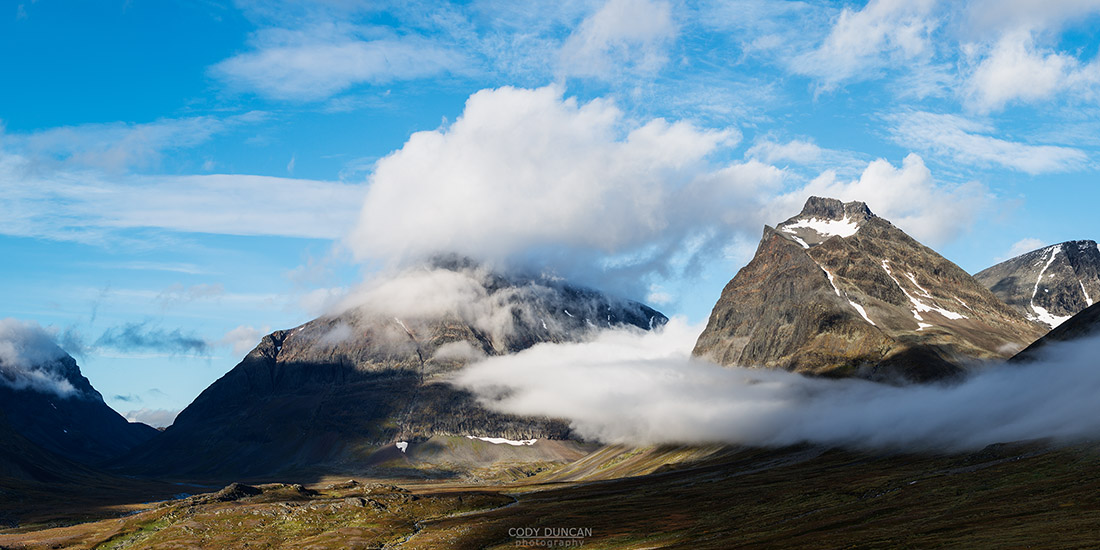
Photo: Fantastic mountain views from near Kebnekaise Fjällstation, Kungsleden trail, Sweden

Photo: Heading north towards Tjäktja pass from Sälka hut, Kungseden trail, Sweden
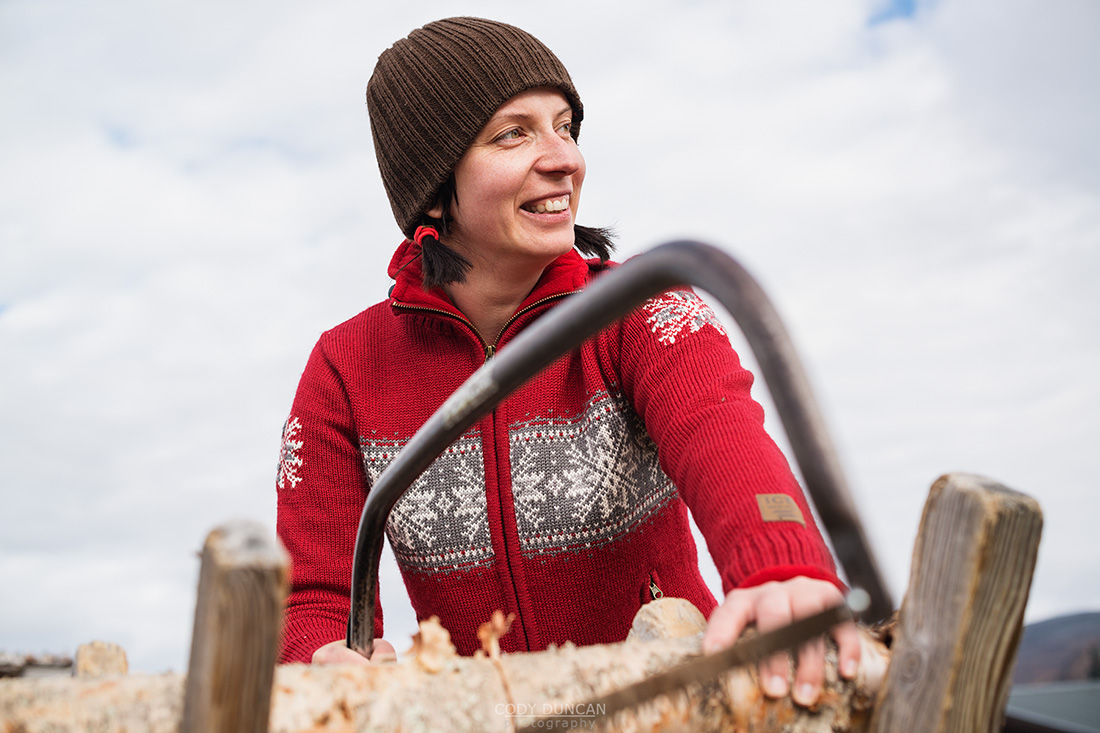
Photo: Wood warms you twice: once when you cut it, once when you burn it. Alesjaure hut, Kungsleden trail, Sweden
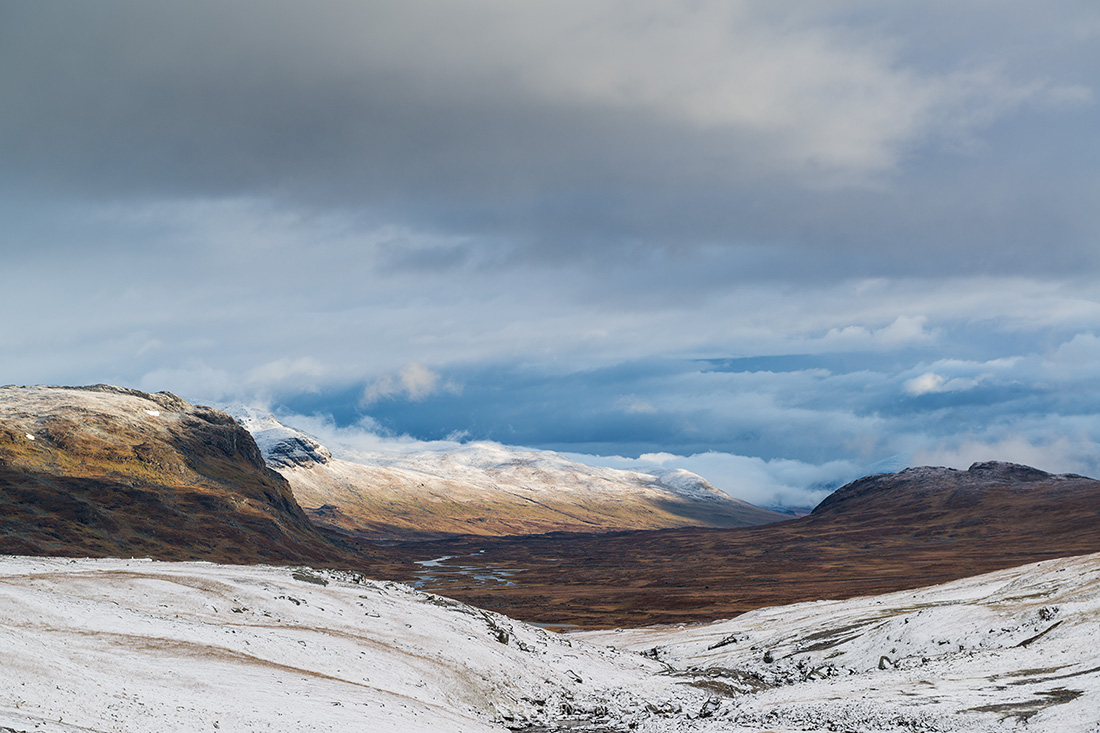
Photo: Fresh snow leaving Tjäktja hut, Kungsleden trail, Sweden

Photo: Approaching rain at Alesjaure hut, Kungsleden trail, Sweden
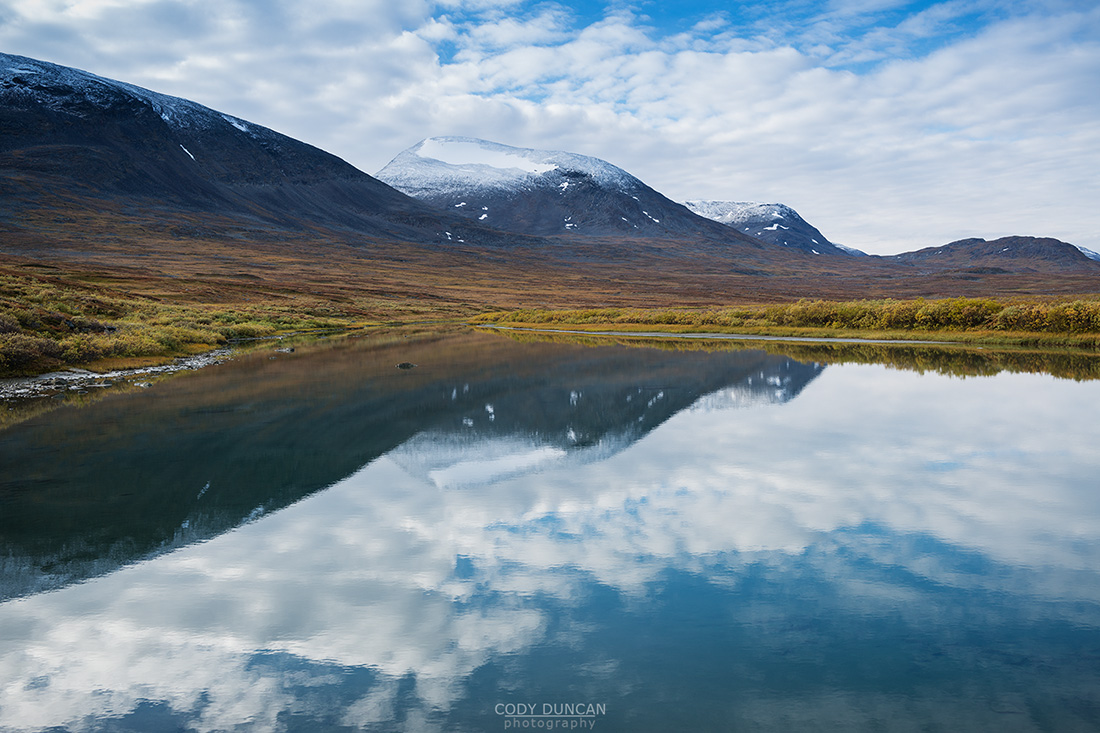
Photo: Bright colors of autumn near Alesjaure, Kungsleden trail, Sweden
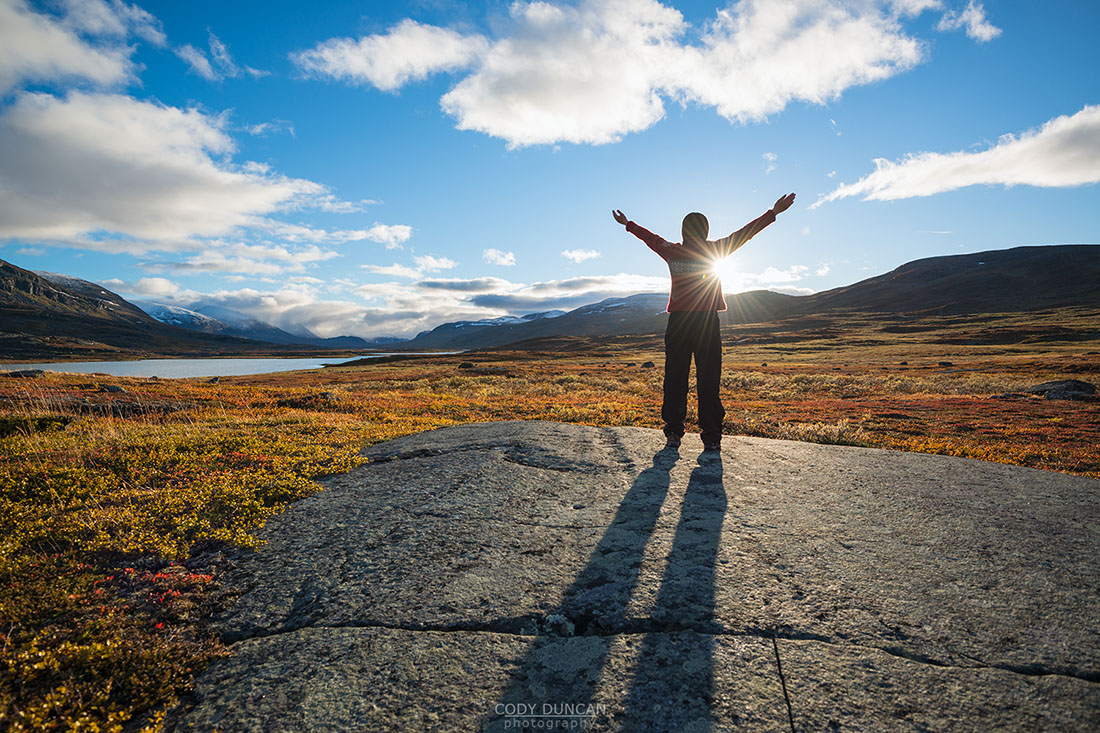
Photo: Greeting the afternoon sun, Kungsleden trail, Sweden
Hey Cody,
thanks for your blog and the nice photos! I have one special question, I am considering hiking Kungsleden or some other trails around Abisko in mid/end September in the hope of seeing the northern lights. Theoretically, it is high enough latitude to see the aurora. How was your experience with aurora?
Cheers,
Dušan